
HN commenters call it a moving, well-made human story about AI and Go that works for non-technical viewers and does not date.
Topics › Games & Game Development
The best chess, board games & puzzles videos, according to Hacker News
27 videos about chess, board games & puzzles that Hacker News commenters keep pointing each other to, ranked by how many separate months they were recommended. Part of Games & Game Development.

Loved on HN as a hilarious, brilliant example of hacker-academic work and cited whenever game-playing AI or fuzzing comes up.

Frequently recommended in threads on learning, the 10,000 hours rule and deliberate practice as a clearer account of how expertise develops.

HN commenters call it a must-watch for its deadpan, absurdly elaborate engineering and cite it for ideas like diluting strong engines with random moves.

Recommended in threads on ancient games and cuneiform as a charming match with an enthusiastic expert.

Strongly recommended as a way to improve at chess, since it explains the basics and common mistakes at each rating level.

HN chess improvers recommend Bartholomew's beginner playlist as a clear, approachable path to getting better.

HN points to it as a vivid demo that plain A* search can beat fancier machine-learning approaches in game AI.

HN commenters point to it as a good talk on how one person built a major free, open-source chess server with few resources, and on the cheating problem.

HN people point to it for intuition about why some games are hard to navigate and for its Rush Hour and graph visualizations.

HN links it as the accessible, hands-on demo behind the claim that Magic is Turing complete.

HN recommends it as a striking, well-explained example of AlphaZero's play and of zugzwang.

Recommended as an accessible explanation of how Rubik's cube solving relates to group theory.
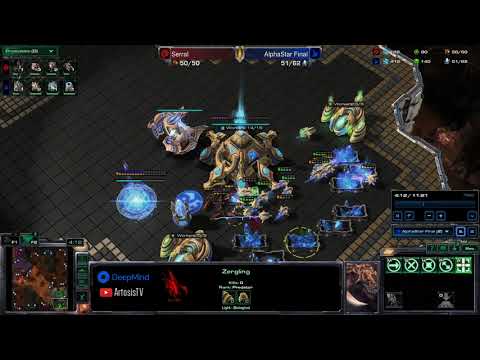
Cited as footage of AlphaStar beating a top human StarCraft 2 player, and for accessible game analysis.

Used as a nostalgic link to a beloved childhood game, and as an example of a tight failure-iteration learning loop.

HN points to it as an entertaining analysis of AlphaZero's play in threads about chess engines.

HN links it as a fun explanation of the purely mechanical Dr. Nim game in threads about early game computers and marble-based binary math.

Cited in discussions of the scientific method and empiricism as Feynman's classic analogy of watching a game to infer its rules.

HN cites it as a neat, simple trick of relaying moves between opponents, often in discussions of chess, AI or ludic fallacies.

Cited as the real-world example of an inescapable loop in Magic: The Gathering, in discussions of its Turing completeness.

Cited in StarCraft AI threads to show how much perfect micro matters, though one commenter finds such play boring.

Cited as an example of automated content moderation misfiring, notably the incident where chess talk was flagged as hate speech.

Used as a joke or shorthand quote, 'the only winning move is not to play', in unrelated threads.

HN commenters cite it as an example of expert memory built on context, such as Carlsen identifying players, tournaments and moves from positions.

Cited as the source for the claim that Niemann had many 100% engine-match games; one commenter calls it a credible-seeming analysis.

Cited as proof that machines solved the cube in under a second years ago, often as the earlier record before newer robots.

HN commenters cite it only as an early example of a politically motivated drone-style attack on Kasparov.
Which of these have you already seen?
Connect YouTube and HackerTube AI hides what you've watched and ranks the rest for you.