
HN repeatedly calls it the best in-depth introduction to IC manufacturing, a sense-of-awe talk by an independent engineer, while wishing for an updated version.
HackerTube Longs: the best long talks and lectures recommended by Hacker News
Over an hour each. The deep-dive talks and lecture series HN keeps sending people to.

HN treats it as the canonical, near-universally recommended lecture on giving talks and presentations.

HN treats it as the best starting point for really understanding backprop and neural nets, because Karpathy explains the why with intuition and builds everything in code.

HN repeatedly recommends it as a master class in limited-palette pixel art and palette cycling, from an artist behind Loom and Monkey Island.

HN treats it as the definitive, compassionate documentary on why people fall into conspiracy theories.

Repeatedly called the best way to understand ADHD, and recommended to anyone before commenting on it.

HN treats it as the canonical talk on software complexity, shared constantly and recommended to every programmer regardless of language.

HN commenters repeatedly recommend it as the talk that finally made quantum mechanics click, especially for programmers.

HN users repeatedly say it changed how they think about writing, calling it a masterclass useful far beyond academia.

HN recommends it often as an entertaining and authentic dramatization of Sinclair versus Acorn, the story from which ARM grew.

HN recommends it often and strongly as an eye-opening account of marketing psychology and the engineering of consumer society.

HN commenters push it, often forcefully, as the video to watch to see what factory farming really involves, and some say it changed their diet.

Recommended again and again as the best accessible overview of fusion physics, useful for judging fusion announcements and understanding why high-temperature superconducting magnets matter.

It is the go-to recommendation for anyone who wants to genuinely understand Bezier curves and splines, and commenters repeatedly call it one of the best programming-related educational videos.

HN repeatedly recommends it as an entertaining, mind-opening talk on allocator design and composable generic programming.

HN recommends it as the best readily available interview with Simons, notable for his emphasis on luck and a humble approach to success.

The most-linked YouTube video on HN, recommended as an in-depth explanation of fructose metabolism.

It is the go-to talk HN commenters recommend to anyone asking about bootstrapping, SaaS pricing, or choosing bootstrapping over VC.

HN calls it mandatory viewing on the AGC, praising the speaker's enthusiasm and the clear account of restartable, robust software design.

It is HN's most frequently recommended starting point for quantum computing because it avoids pop-science hand-waving and needs only basic linear algebra.

HN repeatedly recommends it as an amazing talk that derives the essence of Lisp and shows miniKanren-style program synthesis.

HN repeatedly calls it the best talk on testing, and many say it changed how they approach tests, mocks and the meaning of a unit.

HN repeatedly names it the best resource on API design, a staple answer to any 'how do I design an API' question.

HN commenters call it a moving, well-made human story about AI and Go that works for non-technical viewers and does not date.

HN commenters send people to it whenever nulls, Maybe/Option or static typing come up, as a thoughtful dissent from the type-system orthodoxy that changes how some people model data.

Perennially recommended as an inspirational talk for people facing setbacks or choosing a direction, and a source of oft-quoted lines like the brick wall.

HN commenters call it their favorite introduction to regenerative agriculture, and several say it changed how they garden or farm.

HN repeatedly recommends it as a fantastic demonstration of procedural, OOP and FP approaches to the same problem, and of functional core and imperative shell.

HN people recommend the SICP lectures as a deeper, livelier route into the book and a formative course even for seasoned programmers.

It is the standard link in HN threads about software decay, lost knowledge and fragile technological civilization.

HN commenters recommend it as a pointed critique of philanthropy and win-win thinking, delivered inside Google itself, and cite it across threads on wealth, tax and tech power.

HN recommends it as an illuminating, eye-opening long-form take on status, luck and how we judge the successful and unsuccessful.

Hailed as the best video on electrical engineering and an essential, eye-opening watch for anyone designing high-speed boards.

Seen as a classic and often the moment programming 'clicks'; commenters praise Abelson's opening that computer science is not about computers.

A staple on must-watch lists, recommended as a starting point for Kay's thinking and for why software is often poor and ahistorical.

HN treats it as the standard starting point for Game Boy emulator writers and homebrew developers, with several calling it one of their favorite talks.

HN repeatedly recommends the Crockford series as a must-watch history of computing and programming languages, and as a way to learn to think in JavaScript.

HN recommends it repeatedly to people struggling with motivation, distraction or phone and internet addiction, as a science-based guide to dopamine.

HN readers recommend it as the best primer for understanding ADHD at a neurological level, often suggesting that even the first 10 to 20 minutes are enlightening.

HN treats it as the standard one-hour teaser for the book and recommends it for its deep-modules thinking before buying or reading the book.

HN recommends it as an engaging overview of programming history and an argument for professional standards, citing the agile manifesto section and the claim that software has advanced little since the 1950s.

HN recommends it, long as it is, as an eye-opening rant on software complexity and why systems became so complicated.

HN commenters recommend it as a long, evidence-backed theory for what changed in the 1970s and why Congress is broken, even when they are unsure they agree.

HN's go-to link in typing debates and for talk lists, and several call it their favorite programming talk even for non-Clojure users.

HN repeatedly recommends it as the definitive explanation of why Java evolves cautiously and why compatibility matters in language design.

HN commenters recommend it for Thompson's funny, first-hand Unix history stories, some of which even Kernighan had not heard.

HN points to it as the grounded, approachable explanation of why REBCO magnets changed the outlook for fusion.

Recommended as the rigorous, math-heavy original course, deeper than the Coursera version, for learning machine learning.

Frequently recommended as an influential talk on decoupled, testable architecture, though some commenters push back on Martin's TDD advocacy.

Repeatedly recommended in education threads as the definitive talk on why lectures fail and what works better.

HN treats it as the definitive deep dive on Nanite, admired for the engineering ambition behind pixel-sized triangles and compute-driven rendering.

A classic recommended to people learning JavaScript, even though some find it dogmatic and dated.

HN points to it as the definitive, entertaining account of Sun's fate under Oracle, and quotes its Ellison lawnmower advice whenever Oracle behaves badly.

HN's most frequent recommendation for a clear, approachable foundation in how LLMs work without heavy math.

HN recommends it as a talk whose advice on simplicity and avoiding unnecessary work applies well beyond games.

HN repeatedly recommends it as the clearest and most correct beginner explanation of monads, with several commenters saying it finally made them click.

Commenters offer it as a fascinating, accessible introduction to the world of fungi whenever mushrooms or mycelium come up.

A perennial favorite, recommended as proof that expressive modern C++ can compile to efficient code even on tiny retro hardware.

Repeatedly recommended as a revelatory talk on how little control the main OS has over modern SoCs and PCs.

Frequently recommended in threads on nutrition, cancer and veganism as a science-focused case for plant-based diets, with at least one commenter saying it made them go vegan.

It is one of HN's most frequently recommended programming talks, cited whenever people debate complexity, simplicity and abstraction, and valued well beyond Clojure.

Strongly recommended in Shenzhen and hardware threads for its view of fast cycles, loose IP and the maker ecosystem.

HN programmers recommend it, and the Jai series that followed, for the game-industry view on replacing C++ and for watching a language being invented.

HN treats it as the canonical talk for the case that vanilla Vim goes a long way and plugin dependencies are a burden.

HN returns to it in every versioning and API stability debate as a challenging, contrarian talk worth watching.

HN treats it as the definitive, engaging talk on hash table internals and Python dict ordering, and recommends it in tech-talk lists.

Recommended as the best account of Blender's history and its user-focused approach as a free software success story.

It is the go-to talk HN points to for data-oriented design and hardware-aware performance thinking, despite Acton's blunt style.

HN commenters repeatedly point people to it as the most accessible, developer-friendly introduction to geometric algebra and its use in graphics and physics.

HN treats it as an essential piece of computing history that shows how many modern interface ideas were already solved in 1968.

Frequently recommended as an excellent, clear introductory RL course from the lead of AlphaGo, pairing well with Sutton and Barto.

HN frequently calls it the best single video on git because it teaches the underlying data structures.

HN recommends it as the one long programming video worth watching, a provocative and influential take on C.

HN readers recommend it as a detailed, intelligent documentary about wartime technology that assumes viewers aren't stupid.

Recommended during Afghanistan withdrawal threads as a sobering look at why the transition to local forces was failing.

HN cites it whenever chip architecture, Moore's Law or CPU design comes up, as an unusually deep and accessible view from a top designer.

HN recommends it as a key Hickey talk on system design that changes how people think about distributed state and interfaces.

HN commenters strongly recommend it as an audiobook-length, deeply informative introduction to Sumer and early Mesopotamian civilization.

It is the go-to recommendation for learning how transformers and LLMs actually work, praised for its clarity and Karpathy's teaching.

Commenters repeatedly recommend it in tax haven and offshore finance threads as an excellent, low-budget overview of British offshore finance.

HN recommends it as a favourite tech talk full of good ideas from forgotten 1980s software, worth watching in full.

HN readers recommend it as an accessible, motivating summary of Why We Sleep for people who will not read the book.

HN commenters call it an absorbing, entertaining deep dive on elevator security and the go-to link whenever elevators come up.

HN links it whenever threads cover book spam, AI-written ebooks or passive-income hustle culture.

HN commenters recommend it whenever someone asks how to read type-system or CS notation in papers.

Repeatedly named the best practical tutorial for using LLMs, with a well-liked fine-tuning section.

After the 2022 invasion, commenters spread it widely as an eye-opening explanation of Russian mindset, corruption and propaganda, though a few doubt the presenter's rigor.

HN regulars treat it as an essential, fun Hofstadter talk for any discussion of concepts, analogy and metaphor.

Repeatedly called the best and most comprehensive AGC talk, with commenters rewatching it and treating it as foundational computer architecture learning.

HN repeatedly recommends it as the talk that finally makes git's data model click for beginners, despite its odd title.

HN cites it as an accessible physician-led review supporting claims about infrared light, mitochondria and morning sun.

HN recommends it as an 80-minute way to get the gist of the book and a different view of what money is.

Regarded as the definitive, if heartbreaking, account of Terry Davis and TempleOS.

HN commenters cite it in homelessness threads about San Francisco and Seattle as an eye-opening, widely viewed argument for treatment-first policy, though some see it as pro-law-enforcement framing.

HN commenters recommend it as a brilliant talk on Julia's design and how it is or isn't a Lisp.

HN users repeatedly credit it with fixing their sleep, especially its advice on morning light and dimming lights in the evening.

The go-to citation in Moore's Law threads, a convincing counterargument from a top CPU designer.

HN recommends it as the definitive technical deep dive into Stuxnet's zero-days from someone who analyzed it first-hand.

Praised as a charismatic, engaging talk with practical security lessons, like why credit cards protect you better than debit cards.

HN returns to it as Linus's own explanation of why shipping software on Linux is hard and why he dislikes GPLv3.

Recommended as a thorough, sober critique of meme-stock culture and a good starting point whenever GameStop news appears.

HN treats it as the go-to talk on OPSEC and pseudonymity, recommended in threads about Tor, Silk Road and staying anonymous online.

Several HN commenters credit the lecture series with helping them through depression or personal collapse and recommend it as long-form learning.
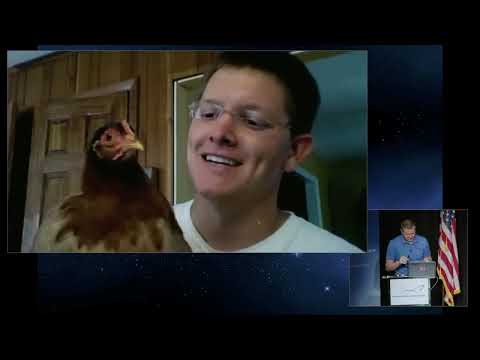
Commenters point to it whenever Artemis, SLS or Starship refueling comes up, as a candid and critical engineering assessment delivered directly to NASA.

HN people cite it constantly in C versus C++ debates as the case for teaching modern C++ idioms rather than C first.

HN uses it as a contrarian critique of renewables and green tech, often recommended with caveats about bias and flawed conclusions.

Adams fans repeatedly call it one of his best talks, a funny and moving look at extinction and the environment.

Regarded as a brilliant live-coding talk that teaches WASM and interpreter writing, with several calling it among the best conference talks they have seen.

HN commenters recommend it for its source-based history of OOP, though some dispute its account of Alan Kay.

HN regularly names it among the best programming talks ever, praising the storytelling, the demos and the ending.

HN commenters call it better than the Clean Code book, a must-watch for engineers that changes how they read and write code.

HN regards it as a famous, mesmerizing talk, especially for the point that distant galaxies will become unobservable.

Frequently recommended as the clearest plain-language explanation of what a computer fundamentally is, with at least one commenter saying it changed how they think about programming.

HN engineers cite Hartley as the intuitive, field-based alternative to cargo-cult PCB advice, especially on differential pair routing, reference planes and EMI.

Frequently recommended whenever Diablo or its origins come up, for its candid account of the human side of game development.

It is the go-to long-form critique of crypto that HN commenters recommend whenever skeptics ask for a thorough, well-researched takedown.

A perennial recommendation for anyone learning performance optimization, cited whenever hash tables, cache behavior or STL containers come up.

HN recommends it as an in-depth tech talk for urban planning, full of small design touches that make cycling safer.

HN commenters send people to it as the primary source for NVC, recommended for relationships, compassion and difficult conversations.

Frequently recommended as the best free university course on database internals, praised for depth and Pavlo's presentation.

HN regards it as a classic to revisit every few years for improving decisions and self-awareness.

Recommended as a funny but depressing investigation, and the usual link in threads on predatory publishing and fake citations.

HN rates his QuakeCon keynotes among the best technical talks, and cites this one for the VR segment and for his views on Linux gaming.

HN recommends it as the primary source for understanding LiveView's advantages and its middle ground between multipage apps and SPAs.

HN repeatedly points people to it as the clearest way to finally understand OAuth, to the point that one team made it required viewing for new hires.

HN commenters say it convinced them to quit or cut down on drinking, and point to it as a more comprehensive treatment than most articles.

HN people recommend it to anyone wanting a practical sense of what CPUs can really do and why abstraction layers cost so much performance.

HN recommends it as a sobering, still-relevant look at the geopolitical consequences of warming, including why official reports lag the data.

HN keeps pointing to it as a long, fascinating talk on cryptographic, verifiable voting whenever e-voting security comes up.

HN treats it as the definitive writing lecture and recommends it repeatedly, with several commenters saying it changed how they write.

HN calls it one of the best technical talks and the clearest explanation of decorators, generators and context managers.

HN people recommend it as a thought-provoking, wide-ranging case for the stagnation thesis, worth hearing even if you disagree with Thiel.

HN commenters point to it as an equation-free, charming way to hear Feynman explain physics to laypeople, including his famous refusal to explain magnetism with simple analogies.

HN people point to it for rrb-trees, text editor data structures and bringing Clojure-style persistent structures to C++.

Called a favorite and a masterpiece by commenters as the clearest accessible explanation that there are only waves in fields, and what physics still doesn't know.

Strongly and repeatedly recommended as a visually distinctive documentary and a guide to postmodern ideas on politics, truth and technology.

Recommended as a balanced take on AI and education, with the point that learning takes work that no technology can do for you.

HN recommends it as a famous, revealing clash between two thinkers, though some note they largely talk past each other.

During the 2022 Ukraine war threads, HN commenters recommended it as a non-Western perspective on Russia-West relations and Putin's motives.

HN treats it as the classic go-to for learning atomics and memory ordering, recommended over books.

Recommended as the clearest mathematician's perspective on formal proof assistants and why mathematics should be formalized.

HN recommends it as an entertaining talk that starts simple and goes deep on practical performance optimization.

Recommended as a clear, lucid way to learn Paxos and Multi-Paxos, ideally alongside the companion Raft video.

HN repeatedly recommends it as an approachable, math-light route to understanding mass and the Higgs field.

Recommended in diet and weight-loss threads as the accessible case for the carbohydrate-insulin view of obesity.

Praised as a long but rewarding conversation, with commenters especially liking Bach's emphasis on modelling as a skill and his bridge between mind and computation.

Several HN commenters call it one of the best explanations of fasting and insulin and recommend it in diet and weight loss threads.

Recommended as a thoughtful critique of addictive game design and the designer's role in building ethical games.

Recommended as a practical demonstration of how functional thinking improves design without going off the deep end.

HN commenters call it a favorite introduction to Valley history and cite it whenever government and military funding of tech comes up.

HN commenters send people here for a detailed first-hand account from the pilot, and some say it changed their view on the sightings.

HN recommends it as an entertaining, mind-blowing look at compiler cleverness from a great speaker.

HN uses it in debates about what OOP originally meant, since Kay's message-passing view lines up with Erlang's processes.

HN readers say it changed their view of APL and array languages, with a clear walkthrough of how a compiler can be written in this style.

Recommended repeatedly as the best account of container history and how Zones built on and went beyond Jails.

Recommended whenever the demoscene comes up as a well-made, accessible history and tour of the art form.

HN brings it up in any thread about elevators or physical security as a fascinating, entertaining deep dive.

HN recommends it as a lasting philosophy for improving your editing process incrementally, and it was widely remembered after Moolenaar's death.

HN commenters call it one of the most entertaining and informative con talks, and a good window into elevators from a hacker's view.

Recommended whenever versioning, semver, monorepos and backward compatibility are debated, for its nuanced treatment of dependencies.

Repeatedly called an excellent, practical introduction that covers a lot in two hours and explains issues academic textbooks skip.

HN commenters share it as an accessible case for worker cooperatives and workplace democracy as a model for a modern left.

Repeatedly recommended as one of the most approachable introductions to lambda calculus and combinators.

Climate-skeptic commenters link it as evidence against the CO2 consensus, while others cite it as an example of climate-change denial.

Called a classic CCC talk, and the Xerox bug is cited as a cautionary tale about trusting scans and digitized archives.

HN commenters recommend it as an entertaining and informative explanation of how stress affects health.

HN people cite it as insight into how Twitter thought about moderation, and as a source for Tim Pool's arguments about uneven enforcement.

Recommended as a simple, elegant explanation of dropout and its connection to how the brain works.

Regarded as the definitive takedown of the metaverse hype and the Decentraland ecosystem.

Repeatedly recommended as the definitive, well-made explanation of why attempts to reinvent music notation fail and what tradeoffs the current system makes.

HN recommends it as a thoughtful, honest look at the causes of addiction and depression, and as a deeper Mate interview than most.

HN repeatedly recommends it as an up-to-date, fact-focused case for solar and batteries that readers can cite on land use and costs.

HN recommends it as an entertaining, technically masterful showcase of what Perl 6 can do.

HN raves about it as one of the best conference talks, showing a master's creative process and sound design.

HN commenters offer it as a dry but fascinating, hype-free introduction to Cascadia earthquake risk and the evidence for past events.

It is HN's go-to reference whenever device lockdown, DRM, or restrictions on installing software come up, with commenters noting how prescient it was.

HN recommends it for Hotz's reasoning on cameras versus lidar and for an opinionated, original thinker's overview of comma and openpilot.

The go-to link in any anti-cheat thread for a concrete, well-delivered account of machine-learning cheat detection in production.

HN recommends it as a technically rich, beautifully made documentary on ambitious hardware engineering and failure.

HN commenters, including TigerBeetle people, recommend it as the explanation of a methodology for building defect-free, high-assurance software.

Recommended as a sober, physics-based account of how energy underlies the economy.

HN keeps citing it as proof of how advanced a GC-based systems language and integrated workstation were decades ago, and as a model for what desktop OSes could be.

HN recommends it as a crash course on audio reproduction science, especially the finding that listeners reliably prefer more accurate speakers in blind tests.

HN treats Cliff Click's talks as an excellent source on JVMs, garbage collection and hardware-assisted Java.

HN recommends Cantrill talks generally for their mix of industry history, technical depth and entertaining delivery, and this one is a favorite for storage and data integrity threads.

HN recommends it as a great account of how Civilization was made and as a source on perceived fairness in game design.

HN fans love it for Knuth's humor and for how he makes open math problems feel approachable, and it is often cited for details like dancing links and counting rectangle subdivisions.

HN recommends it as the main introduction to Cpp2 and cppfront, and as a credible effort to evolve C++.

HN cites it heavily in diversity and academia debates as an intellectual analysis of the truth versus social justice conflict.

HN recommends it as the full account of the lab mice issue and evolutionary tradeoffs between cancer and longevity, despite its length.

HN repeatedly points people to it as the best overview of low-latency trading engineering.

HN commenters cite it as a mind-changing introduction to exponential growth, though some note his peak oil predictions did not pan out.

HN commenters recommend it as a more thoughtful, balanced and personal take on cancel culture than usual discussion.

HN people strongly recommend it as the best overview of the Galactic Starcruiser and a case study in misaligned incentives and poor guest experience, engaging despite its length.

HN cites it in discussions of language evangelism, community dynamics and zealotry, as an accessible account of how a good language can die for non-technical reasons.

Recommended as the standard free course for learning distributed systems from real papers.

HN cites it as the example of a better alternative to whiteboard and fizzbuzz-style interviews.

Seen as the definitive explanation of why traditional concurrency is hard and how Clojure's model addresses it, with some commenters crediting it with changing their careers.

HN recommends it as the best introduction to Factor and concatenative programming, with commenters saying it impressed them with the engineering.

Recommended as a short, fun talk on Node's philosophy and the reasons it was built that remains relevant.
Which of these have you already seen?
Connect YouTube and HackerTube AI hides what you've watched and ranks the rest for you.