
HN repeatedly calls it the clearest introduction to waves and transmission-line behavior, better than modern explainers.
Topics › Computing History & Culture
The best history of computing videos, according to Hacker News
229 videos about history of computing that Hacker News commenters keep pointing each other to, ranked by how many separate months they were recommended. Part of Computing History & Culture.

HN recommends it often as an entertaining and authentic dramatization of Sinclair versus Acorn, the story from which ARM grew.

HN calls it mandatory viewing on the AGC, praising the speaker's enthusiasm and the clear account of restartable, robust software design.

HN commenters repeatedly recommend it as a beautiful, approachable explanation of analog mechanical computation, and many have rewatched it.

HN commenters recommend it as an intimate, embedded look at late-90s web history and the spirit of building something important under pressure.

HN treats it as a classic, near-mandatory talk on how programming tools and paradigms stagnated and which older ideas deserve revival.

A staple on must-watch lists, recommended as a starting point for Kay's thinking and for why software is often poor and ahistorical.

HN commenters recommend it for Thompson's funny, first-hand Unix history stories, some of which even Kernighan had not heard.

HN treats it as the classic demonstration of how analog mechanical computation works, especially the differential gear section.

HN returns to it again and again as a demonstration of how programmable and composable 1970s systems were compared with today's.

HN treats it as an essential piece of computing history that shows how many modern interface ideas were already solved in 1968.

HN points people to it as the clearest primary-source explanation of Unix pipes and the small-tools philosophy, straight from the creators.

Repeatedly called the best and most comprehensive AGC talk, with commenters rewatching it and treating it as foundational computer architecture learning.

HN repeatedly cites it as a thought-provoking talk on reducing software complexity and on the state of computing research.

Cited constantly in threads on microservices, composability and the Unix philosophy as a compact explanation of why small interoperable pieces win.

HN people recommend the whole AGC restoration series as a deeply nerdy look at real Apollo-era hardware, including core rope memory.

Commenters recommend the series whenever Fourier analysis or analog computing comes up, praising Hammack's clear explanations and the short episodes.

HN commenters call it a favorite introduction to Valley history and cite it whenever government and military funding of tech comes up.

HN commenters strongly recommend it for its account of how the Jacquard loom and punch cards led to computers.

HN repeatedly recommends the series for its extraordinary craftsmanship and its credible demonstration of how the mechanism could have been made.

HN keeps citing it as proof of how advanced a GC-based systems language and integrated workstation were decades ago, and as a model for what desktop OSes could be.

Frequently suggested in Ask HN threads on finding ideas, creativity and why incumbents like Xerox missed what they invented.

HN commenters love it as a vivid demonstration of terminal history, explaining why tools like ed and the tty echo model work the way they do.

HN returns to it as a striking demonstration that core GUI, CAD and constraint-programming ideas existed in the 1960s.

HN treats it as the definitive, short, well-made video on mouse cursors and pulls it out whenever cursor design, pixel perfection or the tilted arrow comes up.

HN commenters strongly recommend it as a fun alt-history of the web and bring it up whenever people muse about how the web could have been different.

HN uses it to illustrate physical latency limits and why performance and distance matter in computing.

Recommended as the shortest way to grasp Nelson's idea of referential content and how the web could have been different.

Repeatedly recommended as a favorite tech talk and a great example of digital preservation work.

Recommended in threads on analog computing, photonic chips, AI hardware and tide prediction as an engaging history of Kelvin's machines.

HN commenters recommend it as a demonstration of the Unix philosophy, with small tools composed through pipes.

HN commenters recommend it whenever the Selectric comes up, as a short, excellent explanation of its internals.

The standard recommendation for MiniDisc history, especially as a non-American counterpoint to the failed-format story.

The go-to demo whenever HN discusses what Lisp machines were like and what modern shells and editors lack.

Recommended as a long, rich first-hand account of Mach, NeXT and Apple history and of working for Steve Jobs.

HN recommends it to anyone interested in text adventures, Infocom, MUDs and early computer gaming history.

Recommended as a well-researched piece of computing history on Amiga FPS games and Doom's impact.

HN calls it one of the best explanations of how atomic clocks actually work.

HN commenters recommend the series as the definitive history of BBS culture and its Fidonet roots, especially for nostalgia and the origins of the demoscene.

Recommended whenever outages and cascading failures come up, as a classic on interdependent systems.

HN commenters recommend it as the authoritative, firsthand account of how X came to be and why it isn't GPL.

HN cites it as a startling example of how advanced Lisp machine interactive graphics were, often in Lisp and REPL-driven development discussions.

Recommended as a vivid look at live, interactive programming environments and what Xerox PARC built on very limited hardware.

HN people recommend it as a reading list of historical CS ideas worth knowing, and as a favorite among Armstrong's talks, especially after his death.

Cited in threads about Python's rise as a first-hand, entertaining account of why it won in scientific computing.

HN points to it as a short, clear explanation of why Enigma was breakable and how search-space elimination works.

Recommended as a charming, from-zero introduction to APL and a window into early interactive computing.

HN commenters recommend it as an excellent deep dive on the real Colossus, full of stories about unsung engineers.

HN commenters point to it as the author's own short explanation of Xanadu's core ideas, usually in threads on hypertext, linking and decentralizing the web.

HN points to it whenever a company shuts down a service and wipes user content, as an entertaining case for digital preservation.

Recommended as the detailed, entertaining history of why 3D Pinball vanished from Windows.

HN points people to it as the canonical demo of early interactive graphics, constraints and objects, and as one of Alan Kay's favorite things to show.

HN shares it as an accessible window into Ted Nelson's vision of Xanadu and linking, which commenters say gains meaning with historical context.

HN recommends it as the definitive documentary on BASIC's origins, and it resurfaces whenever BASIC or Kurtz comes up.

HN commenters post it as a favorite scene about IBM's reputation and sales psychology.

Recommended to anyone unfamiliar with Papert as a glimpse of his vision for computers in education.

Recommended as an engaging, non-technical history of Unix and BSD from someone who was there, and cited for specific stories like the TCP/IP stack.

Recommended as a rare, inspiring history of the foundry business and the relationship between Chang and Huang.

Recommended as a long, excellent first-hand interview with a legendary OS designer, though some note it is light on technical detail.

HN recommends it as a charming, concise demonstration of what makes Erlang special, from the people who built it.

HN recommends it in Voyager threads as a good talk on how these old computers have proved durable and adaptable.

HN likes it for Nelson's habit of reframing computing history so that past decisions look arbitrary.

HN points to specific segments, especially Sutherland's SFQ talk and graphics pioneers, rather than the full seven hours.

Mentioned alongside The Cuckoo's Egg as the screen version of an early computer-security detective story.

Recommended as a short documentary that shows the human side of Dijkstra.

HN recommends it as a good starting point on practical Enigma cryptanalysis with modern hardware.

HN recommends it to see what Kildall was like in real life and as a tribute to an influential figure.

Recommended in note-taking and personal wiki threads for its enthusiasm about granular, densely linked notes and TiddlyWiki.

Recommended in documentary and semiconductor-history threads as a detailed look at Japan's chip industry.

HN links it in spreadsheet-reinvention threads as the clearest look at what Improv did differently, with a distinctive NeXTstep aesthetic.

HN calls it a superb, funny and engaging talk, and links it often after Armstrong's death as one of his best.

Recommended as a glimpse of Papert's vision of computers as tools for learning, shared especially after his death.

Recommended as the definitive retrospective on 3dfx, with first-hand stories about engineering hacks and design philosophy.

HN commenters share it as a rare, atmospheric look at what working at an early computing center was actually like, including how code was submitted and processed.

Recommended as an eye-opening look at pre-computer automation and relay logic.

HN uses it as the canonical demo of Self's integrated, direct-manipulation environment whenever prototypal inheritance or live programming comes up.

HN brings it up in threads on warez, cracktros and the demoscene as a funny, informative history of the piracy scene.

HN points to it as proof that the 1960s already had modeless, sketch-based interfaces that remain impressive today.

HN recommends it as a superb, personal long-form look at Knuth's life and work habits.

Recommended as a great documentary on FidoNet's rise, with interviews with figures like Tom Jennings.

Recommended as a fantastic talk, valued both for its parallelism ideas and for the punch-card story.

HN commenters recommend it as the deepest explanation of how AGC rope memory works and how it differs from core memory.

HN people point to it as Nelson's candid, first-person overview of his life, Xanadu's failure, and the lessons he drew, a historical record from the man himself.
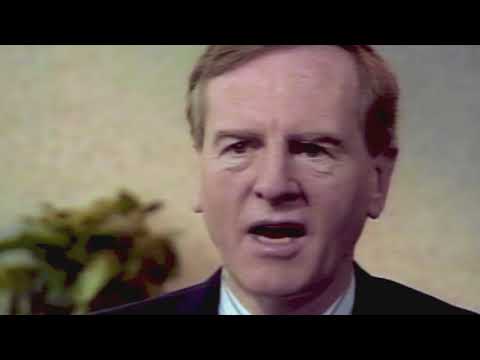
HN recommends the documentary itself as a story of an epic early failure in mobile computing, and the trailer is the linked entry point.

Recommended as a wonderful overview of the AGC architecture, though one commenter found it uninspiring.

Praised as a lesson in explaining technology to non-technical people and as a window into early Mac design.

Linked in Spacewar and vintage computing threads as a charming demo on real hardware.

Recommended as a rare long-form interview with a legendary operating system designer, though some find it light on technical detail.

Linked as the clearest view of the legendary structural editor in threads about Lisp environments and structure editing.

HN commenters cite it as an entertaining example of a teenager buying, hosting and booting a real mainframe.

Shared in threads on window systems and X11 history as a primary-source talk on why NeWS was technically ahead of X.

Recommended as a vintage TV segment on APL's origins, and quoted for Iverson's view of APL as notation.
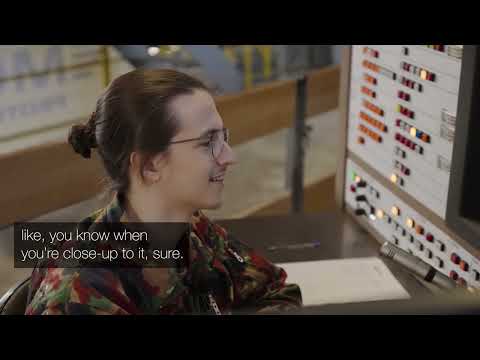
Recommended as a great example of early VR and pre-computer simulation.

HN people cite it as evidence of how fast and responsive a well-designed microkernel desktop could be on modest hardware.

Recommended alongside the original paper and Unix history threads as an engaging account of the typesetter hack.

HN lists it among favorite nerdy documentaries and enjoys hearing Stoll tell the story himself.

HN points to it as a period view of HyperCard and a source for its history and influences.

HN recommends it as a detailed, accurate explanation of why Betamax lost, and cites it in debates over whether VHS was actually the worse format.

Recommended as a fun and illuminating watch on early mobile computing, especially in threads about Bill Atkinson and Telescript.

HN people share it as rare behind-the-scenes footage of the making of a legendary demoscene production.

HN recommends the series as awesome and notes it is now legally on YouTube; commenters cite it for radio history.

HN points to it as a fun, well-known example of line-printer art on early IBM hardware, and to the channel for vintage computing history.

Pointed to as a primary-source interview on Apple's architecture transitions, emulation and microcode work.

HN links it for Jack Tramiel's pricing philosophy and a memorable Tramiel and Wozniak exchange on low versus sustainable pricing.

HN points to it as primary-source evidence of what Kay meant by objects, which resembled services and message passing rather than modern class-based OOP.

HN cites it as a fun, tangible way to teach machine learning, including to kids.

HN shares it as an impressive early example of computer-generated music and of Kurzweil's precocity.

Recommended in threads about SGI and vintage workstations as a good look at the hardware.

HN commenters point to this restoration series as a thorough explanation of how teletypes work at every level.

HN recommends it as an interview-rich history of Handspring, Palm OS and why telcos hurt early smartphones.

Used as a primary source for 6502 origins, pricing strategy and Commodore history.

Linked whenever the Curta or mechanical calculators come up, as a look at a working 3D-printed version.

Recommended as a good explanation of Japanese software industry struggles, though one commenter is unsure of its accuracy.

HN recommends it as a definitive, nostalgic history of BBS culture whenever people ask what the pre-internet online world was like.

HN uses it as the visual reference for Leap keys and Raskin's interface ideas whenever jump-to-text navigation or command palettes come up.

Cited as a great demo of how early microcomputers were actually booted and operated.

HN links it as a vivid example of high-stakes telco cutovers, done with careful coordination, big cable cutters and under a minute of downtime.

HN enjoys it as a funny, quotable lecture from a bygone era, with lines about horizontal scaling and change that still resonate.

Cited as a deep, entertaining look at firmware-level software and vendors abusing pre-boot access.

Passed around in computing-history threads as a charming example of vintage hardware being coaxed into running FORTRAN.
Which of these have you already seen?
Connect YouTube and HackerTube AI hides what you've watched and ranks the rest for you.