
HN commenters repeatedly say it changed how they hear political speech and recommend it for understanding why opponents are not simply stupid.
Topics › Ideas, Learning & Language
The best language & linguistics videos, according to Hacker News
83 videos about language & linguistics that Hacker News commenters keep pointing each other to, ranked by how many separate months they were recommended. Part of Ideas, Learning & Language.

HN uses it as the go-to short piece against pedantry and for language change, recommended whenever grammar disputes come up.

HN points to it as a favorite example of astonishing accent mimicry and fake-language gibberish that sounds real.

It comes up whenever threads touch on fake languages, accents, or gibberish that sounds plausible, and commenters like sharing it with people who haven't heard it.

HN recommends it as a funny, fascinating talk on cuneiform tablets and the ancient world by an engaging curator.

HN users recommend it as a delightful, well-told account of how cuneiform developed and was decoded.

HN recommends it as an efficient, practical approach to adult language learning, with one commenter saying it changed their life.

HN recommends it for a deep theory of why music sounds the way it does.

HN recommends it as a short, clear explanation of why people avoid saying things explicitly and how common knowledge works socially and politically.

Strongly recommended as under-appreciated lectures showing Borges' erudition, delivered in a hypnotic voice from memory.

Cited again and again in terminology debates as a convincing source that many American Indians prefer the term Indian.

HN commenters reach for it whenever a thread involves corporate or political euphemism, using it mostly as a reference.

HN recommends it as a captivating, accessible tour of how English pronunciation changed, including the rise and fall of the rhotic r.
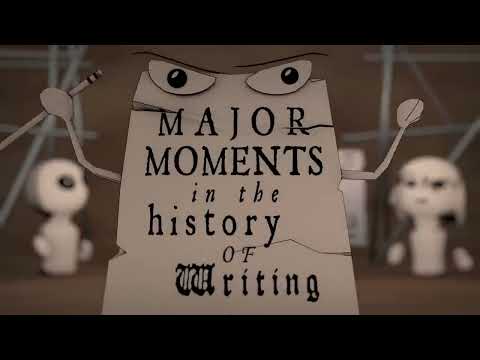
HN recommends it as a fun, amazing overview of writing systems whenever the alphabet or cuneiform comes up.

Linked as an entertaining introduction to Zipf's law and power-law distributions.

HN commenters recommend it as a clear, well-made summary of the linguistics of color naming and how culture shapes it.

HN recommends it as a typical example of Tom7's technically astounding and playful videos.

HN commenters post it in swearing and profanity debates as the best statement against taking offense at profanity.

Recommended as an entertaining, short explanation whenever British place names or their linguistic history come up.

HN commenters point to it when discussing how to teach children or beginners, as a language-like alternative to formal instruction.

HN recommends it as an accessible explanation of rhyme craft that works even for people who aren't hip hop fans.

HN recommends it, and the whole course, for understanding the brain and language acquisition.

HN shares it as a funny, technical story about phonetic profanity filtering, relevant to Soundex and content moderation threads.

Recommended in threads on language purity and standardization for its clear take that languages are fluid and that national languages are constructed.

HN commenters link it as a short, friendly explanation of singular they and grammatical gender in discussions of pronoun usage.

Recommended as the best short, funny and approachable introduction to cuneiform on YouTube.

Frequently linked as a short, accessible demonstration of how Shakespeare actually sounded.

Recommended for readers who enjoy fascinating deep dives into the history of odd letters and the alphabet.

HN cites it for the argument that LLMs capture language form but not meaning, and for how the brain's language network works.

HN commenters recommend it as an enjoyable, accessible tour of US accents and cite it in threads on vowel shifts and dialects.

HN points to it as an expert correction of myths about vocal fry, showing it is a normal speech pattern across groups.

Recommended as an enjoyable look at the hacker mindset and a thoughtful interview worth rewatching.

HN uses it as the short, clear explainer when discussions about greetings and small talk come up.

Recommended in threads on rap vocabulary and rhyme generation as a clear visual explanation of Eminem's rhyming technique.

HN uses it as the standard demonstration that the brain reinterprets perception, in threads on speech, AI audio and illusions.

HN recommends it as an enjoyable overview of American accents and what accent signals socially.

HN recommends it to fans of ancient music as a rare chance to hear an attempt at 4,000-year-old song.

HN recommends it in threads about sheep-counting systems as the famous song that explains them.

HN people recommend it as a look at how to get people to eagerly do useful collective work, and as the origin of Duolingo.

Cited whenever euphemisms appear in corporate, product or news language, as the classic comedic critique.

HN commenters cite it for Pinker's analysis of profanity and of why talking about taboo words differs from using them.

HN people point to it as a fun summary of how messy airport codes are, especially in threads on aviation falsehoods and code collisions.

HN reaches for this clip whenever a thread involves euphemism or corporate and sanitized phrasing.

HN uses it to answer whether Japanese speakers can read Chinese: they can guess a lot, but not reliably.

Cited in threads about renaming and sanitized language as a classic comedic statement of the case against euphemism.

Cited in threads on writing systems and CJK characters as an entertaining test of how much Japanese people can understand of Chinese.

HN quotes it jokingly when talk turns to nonsense language, and one commenter points out its underlying linguistics.

HN mostly drops it jokingly in threads about grammar, apostrophes and language, and occasionally discusses the animated video's making.

Referenced as a fun side tangent whenever the name Tiffany comes up in a thread.

HN uses it as the standard audio example of the Tangier accent in discussions of archaic or colonial-era English.

Mostly posted as a joke in threads about Polish, Unicode or hard-to-pronounce names, and loved as a comedy scene.

HN links it whenever a thread hits the ambiguity of whether a billion is 10^9 or 10^12.

Linked as a concise, accessible rebuttal whenever linguistic relativity comes up in a thread.

HN uses it as a short, clear explanation of implied meaning in conversation and the cooperative principle.

Cited as the source for comprehensible input, the principle behind immersion-based language learning methods and apps.

HN finds Erik Singer's accent breakdowns informative and entertaining, and links them in discussions of accents and speech.

HN cites it as the best-known example of gibberish that mimics the sound of a language, in threads about fake languages and nonsense imitations.

Cited in threads on minority languages as a funny but sad look at how hard it is to live in Irish.

HN commenters cite it in discussions of punctuation, tone and emoji in chat as a short intro to how internet writing norms developed.

HN language learners cite it as the source of the comprehensible input idea and apply it to vocabulary tools and other learning.

HN uses it as the example of how different Shakespeare sounded in original pronunciation.

HN commenters point to it as an easy-to-grasp introduction to Chomsky's ideas on universal grammar and the language faculty.

Cited as an example of a distinctive local dialect, with unfamiliar words and phrases.

Cited as an expert's first-hand evidence that GPT translation is near human quality for distant language pairs.

HN links it as an informed view from a working translator on using GPT for translation.

Only brought up as a joke, usually when someone uses the word literally or the thread is about auto-antonyms.

Used purely as a joke reference to bad translation and phrasebooks.

Dropped into threads about dialects and mutual intelligibility as a comedic illustration.

HN points to it as a striking demonstration that Interslavic works for speakers of different Slavic languages.

HN uses it as a joke reference in threads about the history of the English language.

Cited as the explanation whenever commenters notice Portuguese sounds Slavic.

Mostly posted as a joke or amusing aside in threads about English, language learning, and swearing.

HN uses it purely as a joke reply when an evacuation or similar wording comes up.

It is cited in debates about euphemism and language policing, usually by commenters who think softer terms change nothing.

HN shares it as a joke in threads about English profanity and non-native speakers.

Cited as the classic illustration of accent, class and prejudice in how people speak.

Linked in threads on language and Japan as a famous, exaggerated sketch about natives not accepting foreigners speaking their language.

HN uses it as the go-to link, often jokingly, whenever someone writes "could care less" instead of "couldn't care less".

Cited in subtitle threads for its explanation of why subtitles are condensed and adapted rather than literal.

HN posts it as a joke in threads about Denmark, Danes or languages that are hard to understand.

Cited in language-learning threads as evidence that natives often cannot handwrite kanji.

Cited only as a running joke, usually when someone brings up the word or the Charlie Kaufman film title.

Linked as an audio example of the Ocracoke accent in threads about American dialects.
Which of these have you already seen?
Connect YouTube and HackerTube AI hides what you've watched and ranks the rest for you.