
One of the most consistently recommended lecture series on HN, praised as fascinating, funny and eye-opening about human behavior across many scales.
Topics › Life Sciences, Mind & Health
The best neuroscience & the brain videos, according to Hacker News
92 videos about neuroscience & the brain that Hacker News commenters keep pointing each other to, ranked by how many separate months they were recommended. Part of Life Sciences, Mind & Health.

HN returns to it repeatedly as the best single introduction to understanding clinical depression.

HN regularly calls it mind-blowing and recommends it as an introduction to Levin's work on bioelectricity and regeneration.

HN commenters frequently recommend it as an eye-opening case against heavy porn use, though it is contested science.

HN recommends it repeatedly to people struggling with motivation, distraction or phone and internet addiction, as a science-based guide to dopamine.

HN has recommended it for years as the most useful and entertaining talk on sleep, often to people struggling with tiredness or productivity.

HN readers recommend it as an accessible, motivating summary of Why We Sleep for people who will not read the book.

HN users repeatedly credit it with fixing their sleep, especially its advice on morning light and dimming lights in the evening.

HN commenters say it convinced them to quit or cut down on drinking, and point to it as a more comprehensive treatment than most articles.

HN returns to it constantly in consciousness and decision-making threads as a clear, entertaining explanation of split-brain.

HN commenters recommend it as an entertaining and informative explanation of how stress affects health.

Recommended as a simple, elegant explanation of dropout and its connection to how the brain works.

It is the go-to demonstration of how hypoxia silently disables decision making, cited in threads on altitude, flying, diving, CO2 and breathwork.

HN commenters recommend it as a clear, in-depth lecture on consciousness as a process of prediction.

HN recommends it as a dramatic, moving demonstration of what deep brain stimulation can do for tremors.

Recommended to people with chronic pain, fatigue or RSI as a rigorous but balanced case that pain does not always mean injury.

HN points to it as the standard explanation of why perfect pitch is a childhood window, in threads about absolute pitch training.

HN cites it widely in discussions of tacit knowledge, habit, unlearning and adult versus child learning.

HN links it in threads on absolute pitch as a musician's useful summary of its downsides and age-related decline.

Recommended in threads on consciousness, anesthesia and perception as a fascinating look at how much of experience the brain constructs.

Recommended as an accessible neuroscientist's overview of gut microbiome science with practical takeaways.

HN recommends Sapolsky as an exceptional storyteller and points to this lecture on the biology of human behavior and violence.

HN recommends it, and the whole course, for understanding the brain and language acquisition.

Recommended as a vivid first-person view of the right hemisphere in control, often linked to meditation and non-dual experience.

Cited whenever biocomputing or neurons-on-chip come up, as an accessible example of how such a system can be built.
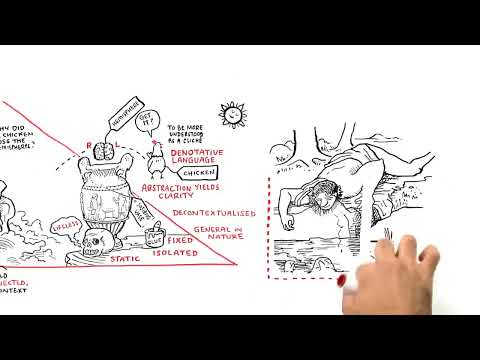
Recommended as an accessible animated introduction to McGilchrist's thesis on hemispheres and narrow versus diffuse attention.

Cited in discussions of perception, consciousness and what is real, though some commenters find his conclusions hand-wavy.

HN commenters recommend it to people with ADHD for helping them understand their behavior and how their brain works.

HN uses it constantly as the classic demonstration that attention is selective, in threads on driving, motorcycles, AI and perception.

HN commenters recommend it as a short, practical guided rest session to use during a midday break or nap.

HN cites it as an impressive garage-science example of neuron-computer interfaces and hard-science DIY biology.

Cited in threads about perceived time as a good, detailed explanation of the effect.

HN suggests it as an easy alternative to the book for people who want Walker's sleep findings.

HN people offer it as practical focus and ADHD advice from a credentialed neuroscientist, though some treat it as only a reference.

HN commenters point to it as an interesting lecture related to psychedelics, brain geometry and hyperbolic space, with a good intro to hyperbolic geometry.

HN people send others here to hear Hawkins explain his theory in his own words, including reference frames and the old versus new brain.

HN cites it as an astonishing glimpse of advanced thought-controlled prosthetics.

Recommended as an approachable look at Levin's work on regrowth and collective cellular intelligence, and used as an example of intelligence beyond brains.

HN cites it for the argument that LLMs capture language form but not meaning, and for how the brain's language network works.

HN points to it as a foundational neuroscience primer, with some commenters crediting it for practical changes to learning and sleep.

Offered as a high-level, approachable introduction to Friston's idea of the brain as a prediction machine.

Cited to explain the default mode network and how meditation may quiet it.

Commenters credit it for practical routines, such as morning walks and circadian timing, and for helping with burnout recovery.

HN points to it as a vivid first-person description of aphantasia and an example of an aphantasic artist.

HN shares it as a delightful demo of the pentatonic scale's near-universal appeal and of a crowd syncing without instruction.

HN links it as a popular, accessible introduction to indoor CO2 and its effect on thinking, in air quality threads.

Cited as an accessible overview of Kernel's technology whenever its brain-sensing helmets come up.

Recommended when religion, mental health or psychedelics come up, for Sapolsky's biological framing.

HN shares it as a compact explanation of how hierarchy and stress affect health, pointing to the longer full lecture.

HN uses it as the standard demonstration that the brain reinterprets perception, in threads on speech, AI audio and illusions.

HN commenters point people dealing with concussions or brain injuries to it as a hopeful first-hand story of recovery.
HN links it as an accessible visual explanation of the problem of mapping brain connectivity.

HN cites it in MBTI threads as an attempt to link personality types to measurable brain activity patterns.

HN links it in caffeine threads as a quick, clear explanation of caffeine's effects.

Pointed to in threads on training absolute pitch in children as a practitioner's account.

HN commenters point to it as a general overview of the cognitive science of insight and focus that is useful for developers and knowledge workers.

Pointed to when people ask for science-based ways to boost concentration or arrange a home office.

HN cites it in depression and brain health threads for its message that the brain can be improved, and that brain injury is common and overlooked.

HN points people to it as an accessible explanation of what qualia are.

Linked as a vivid demonstration of how fast hypoxia incapacitates people, often without them noticing.

HN commenters point to it in threads on fasting, cancer and Alzheimer's as a clinician's overview of metabolic therapy.

HN points to it as the extended documentary on an extreme case of amnesia whenever memory loss or consciousness comes up.

HN cites it whenever threads touch consciousness, perception or predictive-processing, especially for its examples of expectation changing what you perceive.

HN commenters point to it as an accessible interview with a leading figure in the field, especially for toxo and baboon social behavior.

HN cites it as a fascinating look at ultrasound-based brain treatments.

HN people send it to others in addiction and digital-habits threads as an expert explanation of dopamine baselines.

HN refers to it as a vivid first-person account of anendophasia whenever inner monologues come up.

HN commenters mention it as an accessible introduction to the theory of constructed emotions.

Recommended as a quick demo of vision overriding hearing, and cited as an example of perception producing confident wrong answers.

Recommended as Hawkins' own accessible statement of his brain-inspired theory of intelligence and its software implementation.

HN cites it as a real academic source to back up or correct claims about emotion, anger and anxiety in the brain.

Cited in threads on exercise and cognition as an accessible overview of the movement-brain connection.

Mentioned occasionally as an episode on environmental toxins in food and water, though one commenter lumps it in with unregulated quackery.

HN points to it when discussing DMT research and reports of contact with entity-like beings.

Cited as a source for claims that learning an instrument connects both brain hemispheres, though some commenters note they haven't verified it.

HN mentions it as evidence that the Wim Hof method can be learned and as the documentary that led some to try breathing and cold exposure, while others dispute the claims.

Pointed to as a clear statement of irreducible complexity, the limits of reductionism, and why simple neuron-level explanations fall short.

HN mentions it as a reference for Openwater's approach of light-based deep tissue imaging.

HN links it as an example of extraordinary episodic memory in threads on memory and knowledge.

HN commenters use it as a fun, accessible demonstration that color perception depends on surrounding patterns and that what we see differs from what the eyes register.

HN cites it as the landmark brain-decoding demo and compares newer reconstruction work against it.

Commenters cite it when arguing for less phone time and more idle, undistracted thinking.

HN points to it as an accessible explanation of how color and reflected light behave, especially under LED lighting.

HN cites it in discussions of reconstructing images from brain scans and the ethics of future brain reading.

HN commenters link it as a concise piece of expert testimony in threads on declining test scores and technology in education.

Cited in discussions of perfect memory as an illustration that it can be a burden rather than a superpower.

Cited as a concrete example that humans can learn echolocation, in threads about animal and human sonar.

Used as a reference when discussing inverted-steering analogies and how hard it is to rewire a learned skill.

Used as the canonical example of striking absolute pitch in children in discussions on how perfect pitch is acquired.

HN commenters cite it to explain why people in old photos seem older than they were.
Used as a vivid example of spinal pattern generators and morphological control in locomotion discussions.

Linked in threads about Kurzweil joining Google, mostly as a source for his exponential progress charts and his ambitions there.
Which of these have you already seen?
Connect YouTube and HackerTube AI hides what you've watched and ranks the rest for you.