
It is HN's standard answer to why Python cannot easily get much faster, and is recommended by people who work on JITs and alternative runtimes.
Topics › Software Engineering & Languages
The best programming language design videos, according to Hacker News
190 videos about programming language design that Hacker News commenters keep pointing each other to, ranked by how many separate months they were recommended. Part of Software Engineering & Languages.

HN treats it as the standard answer to why FP isn't mainstream and why languages succeed.

HN commenters send people to it whenever nulls, Maybe/Option or static typing come up, as a thoughtful dissent from the type-system orthodoxy that changes how some people model data.

Recommended whenever APL or array languages come up as the quickest way to see why the paradigm is so striking.

Seen as a classic and often the moment programming 'clicks'; commenters praise Abelson's opening that computer science is not about computers.

HN repeatedly recommends the Crockford series as a must-watch history of computing and programming languages, and as a way to learn to think in JavaScript.

HN considers it one of the best technical talks ever and cites it in discussions of language design, small cores and extensibility.

HN's go-to link in typing debates and for talk lists, and several call it their favorite programming talk even for non-Clojure users.

HN repeatedly recommends it as the definitive explanation of why Java evolves cautiously and why compatibility matters in language design.

A classic recommended to people learning JavaScript, even though some find it dogmatic and dated.

HN programmers recommend it, and the Jai series that followed, for the game-industry view on replacing C++ and for watching a language being invented.

HN regards it as an entertaining and eye-opening introduction to why logic and functional programming are connected, and it is a frequent pick in favorite-tech-talk threads.

HN returns to it as the go-to critique of OOP, recommended for explaining the costs of abstraction better than most written arguments.

HN commenters recommend it whenever someone asks how to read type-system or CS notation in papers.

HN recommends it as a quick, compelling look at what Smalltalk tooling feels like, especially for Ruby programmers.

Recommended repeatedly as a funny, informative talk on the economics behind programming languages and open source.

HN commenters recommend it as a brilliant talk on Julia's design and how it is or isn't a Lisp.

HN returns to it constantly as the talk on live programming and what modern tooling is missing, though a few found it too much.

HN repeatedly recommends it as the definitive introduction to Zig straight from its author, and links to it whenever Zig's design choices come up.

HN treats it as the best introduction to Unison, with commenters finding hash-addressed immutable code mind-blowing.

HN people recommend it as an eye-opening talk whose domain-modeling ideas carry over to other languages and make a strong compiler feel like a coding partner.

HN treats it as the standard introduction to Zig by its creator, with some calling it among the best talks they have seen.

It is the go-to answer to whether Prolog is used for real-world work, praised as a survey of its uses, advantages and drawbacks.

HN readers say it changed their view of APL and array languages, with a clear walkthrough of how a compiler can be written in this style.

Treated as a must-watch for language designers, and cited whenever extensibility and language size are debated.

HN returns to it to explain why Go deliberately resists syntactic sugar and new features.

HN recommends it as the best video introduction to the actor model, straight from its inventor, and revisited it after Hewitt's death.

HN recommends it as an entertaining, technically masterful showcase of what Perl 6 can do.

HN keeps pointing to it as a thoughtful vision of programming for non-programmers and as background on Eve's motivations.

HN commenters recommend it as the definitive explanation, from a language designer, of why multiple dispatch makes Julia's composability work.

Recommended as the clearest explanation of Elm's design thinking and of making functional languages mainstream, plus a popular monad explanation clip.

Strongly recommended for anyone working with vectors for its clear take on how they should be treated in types.

HN recommends it as the main introduction to Cpp2 and cppfront, and as a credible effort to evolve C++.

Recommended as a fantastic introduction to declarative and Datalog-based distributed systems and failure modeling.

HN cites it in discussions of language evangelism, community dynamics and zealotry, as an accessible account of how a good language can die for non-technical reasons.

HN recommends it as the best introduction to Factor and concatenative programming, with commenters saying it impressed them with the engineering.

It is the standard recommended introduction to Shen, pointed to whenever Shen or its type system comes up.

Cited again and again as the framework for discussing languages in terms of values, and how organizational values shape software quality.

HN commenters bring it up whenever C++ complexity or the pitfalls of language design come up, as a witty and authoritative warning.

HN fans call it one of Kay's best talks and recommend it for rethinking why programming paradigms have barely changed.

HN recommends it as an entertaining and eye-opening look at the irrational psychology behind language preferences, though some note it is not scientifically precise.

Recommended as a funny, accessible history of Haskell that is valuable even for people interested in language design in general.

Recommended as the approachable way into a precise definition of language expressiveness for language-design arguments.

Repeatedly recommended in best-talks threads as a fun, mind-blowing demonstration of unexpected computation.

HN recommends it as a terrific talk on APL readability and on the idea of idioms over libraries.

HN treats it as the canonical, approachable example of domain-driven design with types and 'make invalid states unrepresentable'.

HN points to it as a rare side-by-side of the TypeScript and Dart designers, often to show how the two approaches to improving JavaScript differed.

Recommended as the best demo of interactive, compiler-assisted dependently typed programming in action.

Commenters point to it as a compact, impressive demo of what the language can do.

Linked as a source for first-hand JavaScript and Netscape history, with commenters pointing to specific segments like the Java versus JavaScript decision.
HN points to it to show how deliberately the Rust team arrived at async/await and why it was chosen over alternatives like green threads.

Recommended during the await syntax debates for explaining the constraints that shaped Rust's async design.

Recommended as a vivid look at live, interactive programming environments and what Xerox PARC built on very limited hardware.

HN points to it as the best account of what Self made possible and what its team went on to do.

Recommended as the case for blocking code and virtual threads over monads and async/await.

HN recommends it as an excellent talk on notation problems, useful when reading papers or designing a new metalanguage.

Pointed to whenever C++ exception overhead, bans on exceptions or error-handling alternatives come up.

Commenters rate the whole playlist as high-quality, clear teaching that builds foundations from memory and machine instructions up to different paradigms.

Praised as a standout, non-standard Strange Loop talk explaining the reasoning behind Uxn and resilient computing.

HN remembers it as the memorable explanation of restarts and multiple dispatch, referenced whenever those features come up.

Recommended as a charming, from-zero introduction to APL and a window into early interactive computing.

HN commenters recommend it as a way to understand what the VPRI group considers core, such as supporting any syntax on one JIT compiler and removing boundaries between application and interpreter.

HN points to it as a good introduction to Idris 2 and a striking demonstration of what dependent types enable.

HN commenters call it a fantastic introduction to Clojure and the thinking behind its design.

Cited in Rust and systems-language threads as the best introduction to ATS, a language claimed to go beyond Rust's safety guarantees.

HN treats it as the definitive resource for understanding Pin semantics and lists it among async Rust learning materials.

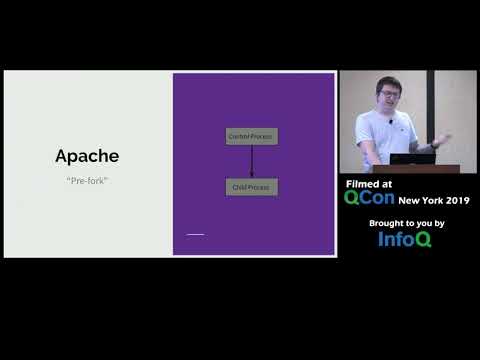
Recommended for explaining why Python is hard to optimize and the limits of making it fast.

HN commenters cite it whenever JavaScript classes, `this` or inheritance come up, as the clearest case for classless OOP from Crockford.

HN recommends it as the definitive documentary on BASIC's origins, and it resurfaces whenever BASIC or Kurtz comes up.

HN recommends it as the best talk on concatenative languages and their mathematical properties.

HN recommends it as an accessible demonstration of what Smalltalk environments offer and a reference for advanced IDE ideas.

HN calls it dense but mind-blowing, the go-to way to understand lenses through algebraic derivation.

HN commenters point Rubyists and the Smalltalk-curious to it as an approachable introduction that shows the Smalltalk system browser and Pharo environment in action.

HN recommends it as the best detailed explanation from the language's creator of how Elixir's new type system works and why.

HN people recommend it as a fascinating history lesson showing that the field keeps rediscovering ideas from the 1960s.

Recommended for a substantive look at language design priorities and a critique of why modern programming feels broken.

HN points to it as the main argument from the array-language camp that types are unnecessary there, and as a nuanced take on typed versus untyped programming.

HN recommends it as the clearest account of the CSP lineage behind Go's goroutines and channels.

Praised as the best talk of CppCon 2017 and the key introduction to metaclasses and generative C++.

It is the standard citation in HN arguments over Rust for game development, the borrow checker and ECS designs, as a skeptical view from an experienced game developer.

HN recommends it as a mind-blowing and fun introduction to logic programming for working programmers.

HN uses it as a concise statement of the thinking behind Go's design.

HN commenters recommend it in Smalltalk and Unix threads as a demonstration of runtime dynamism hiding in native binaries and shared libraries.

HN recommends it as a quick, wonderful look at infinite towers of interpreters and what they make possible.

HN readers point to it as an example of Tom7's ridiculous-but-brilliant programming projects, here tied to license parody and typesetting.

HN commenters recommend it as the main resource on Swift as an incremental successor to C++ and on how the interoperability works in practice.

HN recommends it as a striking example of high-performance tree handling with array programming.

Jai had no public release, so commenters point to this beta user's videos as a way to see what the language is actually like.

Used as the primary source for Apple's stated plan to make Swift its successor to C++ and for how interop supports gradual transition.

HN points to it as the main place to hear Lattner's motivations and design ideas for Mojo, often in Mojo threads.

Recommended as a slow-paced, detailed live-coding session that makes lifetimes click once you are past Rust basics.

HN recommends it as a clear introduction to linear types in GHC from the language's lead designer.

Cited in debates over Elm's direction and open source health, with some praising its points about metrics and others finding its tone toward unhappy users hard to watch.

HN commenters point newcomers to it as a solid starting point for getting to know Julia.

It is the go-to source for the idea of making illegal states unrepresentable through types, with the key moment at 28:02.

HN recommends it as a sampling of truly different programming paradigms beyond mainstream OOP.

HN recommends it as the best short introduction to what makes Prolog unique.

HN points to it as an entry into Ackley's indefinitely scalable computing project, with a network-switch demo recommended as the best place to start.

HN recommends it as a window into Moore's minimalist CPU design and the GA144 chip, despite the slow pace.

HN uses it as the canonical demo of Self's integrated, direct-manipulation environment whenever prototypal inheritance or live programming comes up.

HN points to it as the best deep dive into Mojo's design, including MLIR use and SIMD-first scalars.

HN cites it as a practical talk on language design and for background on awk from one of its authors.

HN commenters cite it as a clear account of the trade-offs between static and dynamic typing and why the industry is swinging back to types.

Recommended as an exceptional whirlwind tour of the foundations of computer science.

HN users mine it for design wisdom and history from luminaries, and often quote Guy Steele's remarks.

Recommended as a fantastic talk, valued both for its parallelism ideas and for the punch-card story.

HN points to it as the definitive explanation of why coherence and the orphan rule matter, in debates over Haskell, Rust traits, OCaml modules and Elm.

Cited for showing how Julia's metaprogramming can beat C and Fortran, along with sound advice not to overuse it.

HN points to it for Guido's own views on the GIL, Python internals and using Copilot, especially in Python-related threads.

HN mentions it as the author's own overview of Pixie, with an interesting implementation technique near the end.

Cited in Scala debates as an insider's critique that persuaded many the language's problems were deep.

HN mentions it as one of the talks on Eve, usually as related prior work in discussions of end-user and visual programming.

HN links it in Imba threads as a quick demonstration of how the language combines code, HTML and CSS.

Recommended as a vintage TV segment on APL's origins, and quoted for Iverson's view of APL as notation.

HN points people to it to understand Elm's design philosophy, such as favoring simplicity over type classes, when they question its choices.

HN points to it as a motivating introduction to what program synthesis is and what types can do for it.

HN points to it for seeing Jai's compile-time metaprogramming in practice and for Blow's tools that visualize programs to spot problems.

HN commenters offer it as a good example of what Perl 6 does well and as a way to get started with the language.

Pointed to in language-history discussions as a good account of how ML and SML came to be.

HN recommends it as the best overview of Cursorless, likened to vim with your voice, and relevant to accessibility and voice coding discussions.
Which of these have you already seen?
Connect YouTube and HackerTube AI hides what you've watched and ranks the rest for you.