
It is HN's standard answer to why Python cannot easily get much faster, and is recommended by people who work on JITs and alternative runtimes.
Hidden gems: great videos Hacker News loves that few people have watched
Strongly recommended on Hacker News, under 60,000 views on YouTube.
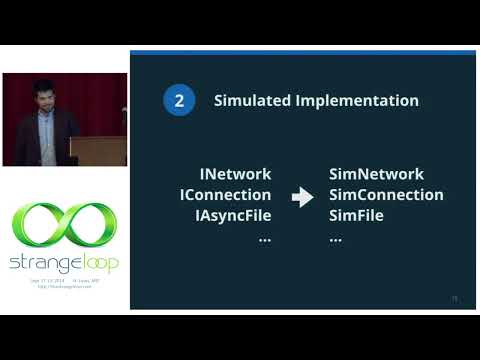
HN treats it as the canonical talk on simulation testing and a mind-blowing example of how far rigorous testing can go.

HN people cite it constantly as the clearest explanation of normalization of deviance and how complex systems drift toward failure.

A staple on must-watch lists, recommended as a starting point for Kay's thinking and for why software is often poor and ahistorical.

Cited repeatedly to rebut 'just don't use Facebook' arguments and to explain why tracking becomes hard to escape at critical mass.

HN repeatedly recommends it as the definitive explanation of why Java evolves cautiously and why compatibility matters in language design.

The go-to talk showing how Erlang let a tiny team run a massive messaging system.

HN returns to it again and again as a demonstration of how programmable and composable 1970s systems were compared with today's.

HN repeatedly names it among the best programming talks, loved for its craftsmanship message that complex tooling can hide simpler solutions.

HN recommends it as the canonical presentation of 'functional core, imperative shell' and a practical answer to unit versus integration testing.

Repeatedly recommended as a revelatory talk on how little control the main OS has over modern SoCs and PCs.

HN repeatedly cites it as a striking example of Common Lisp used to push the frontier of science, and as one of the most inspiring tech talks.

HN commenters call it one of the best security talks and the standard introduction to LANGSEC, which they use to argue for simpler, well-specified input formats.

Frequently linked as a sobering, data-grounded counterpoint to techno-optimism about decarbonization and green growth.

HN recommends it as a favourite tech talk full of good ideas from forgotten 1980s software, worth watching in full.

Recommended whenever DNA testing, CRISPR or bioweapons come up, often as the talk that made commenters decide to keep their DNA out of databases.

HN commenters recommend it whenever someone asks how to read type-system or CS notation in papers.

HN recommends it as a quick, compelling look at what Smalltalk tooling feels like, especially for Ruby programmers.

HN repeatedly recommends it as the talk that made data-oriented, REPL-driven bottom-up design click.

HN commenters recommend it as a brilliant talk on Julia's design and how it is or isn't a Lisp.

Treated as the go-to approachable yet deep primer on CRDTs and collaborative editing, recommended repeatedly in threads on Automerge, local-first software and OT versus CRDT.

It is the favorite recommendation for understanding Moore's minimalist, low-power multi-core designs and stack machines.

HN treats it as the best introduction to Unison, with commenters finding hash-addressed immutable code mind-blowing.

Regarded as a brilliant live-coding talk that teaches WASM and interpreter writing, with several calling it among the best conference talks they have seen.

HN repeatedly recommends it as a delightful talk that makes music theory click and introduces Clojure and Overtone.

HN recommends it as the quickest clear overview of the Brexit options, though later commenters note it predates the final outcome.

Frequently recommended for an experienced game-engine builder's view on why GC pauses are inevitable and why Swift's approach is appealing.

Repeatedly recommended in mental health threads for its honest storytelling that resonates with developers.

Cited constantly in threads on microservices, composability and the Unix philosophy as a compact explanation of why small interoperable pieces win.

HN recommends it as the primary source for understanding LiveView's advantages and its middle ground between multipage apps and SPAs.

It is the go-to recommendation whenever someone asks about voice coding or RSI-friendly programming setups.

HN people point to it for rrb-trees, text editor data structures and bringing Clojure-style persistent structures to C++.

HN recommends it as an entertaining, well-delivered talk full of stories that shows the value of historical context and long comments in code.

It is the go-to answer to whether Prolog is used for real-world work, praised as a survey of its uses, advantages and drawbacks.

HN recommends it as the fastest way to understand what VisiData can do, since seeing it work is clearer than reading about it.

Go-to reference in GTK versus Qt debates, valued for a candid account from experienced developers who tried both toolkits.

HN readers say it changed their view of APL and array languages, with a clear walkthrough of how a compiler can be written in this style.

Recommended repeatedly as the best account of container history and how Zones built on and went beyond Jails.

Treated as a must-watch for language designers, and cited whenever extensibility and language size are debated.
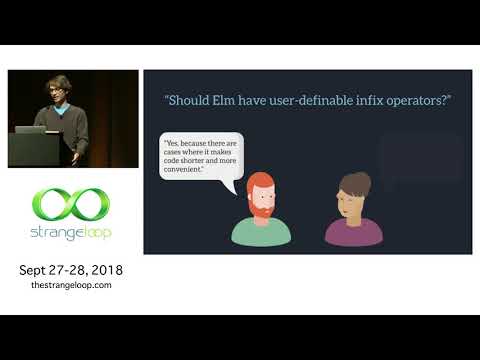
HN recommends it as an insightful look at the people side of open source maintenance, especially in Elm and maintainer-burnout threads.

HN commenters call it one of the most entertaining and informative con talks, and a good window into elevators from a hacker's view.

Recommended whenever versioning, semver, monorepos and backward compatibility are debated, for its nuanced treatment of dependencies.

Repeatedly recommended as the canonical demo of org-mode for literate programming and reproducible research.

Regarded as one of the coolest talks ever, with a futuristic binary visualization demo that has inspired later tools.

Whenever notebooks get criticized, HN commenters point to it as the standard rebuttal from a prominent practitioner.

HN cites it as the key explanation of cooperative, user-scheduled kernel threads and the prior art behind later async and coroutine debates.

It is the canonical demo HN people cite for live interactive development and hot reloading, as proof the workflow is real and not smoke and mirrors.

HN users recommend it as an excellent, accessible overview of how modern chips are produced and why EUV matters.

HN recommends it as an entertaining, technically masterful showcase of what Perl 6 can do.

HN people point to it as the sober, technically grounded picture of hardware supply chain security, and an eye-opening one.

HN keeps pointing to it as a thoughtful vision of programming for non-programmers and as background on Eve's motivations.

Cited as the classic rant on maps versus objects in discussions of data modeling and OOP.

HN treats it as a foundational Bret Victor talk that reshaped how people think about software and interfaces, often cited alongside Dynamicland.

HN readers recommend it as the best introduction to robust-first computing, where randomness and fault tolerance are built into the architecture.

The go-to link in any anti-cheat thread for a concrete, well-delivered account of machine-learning cheat detection in production.

Recommended as a sober, physics-based account of how energy underlies the economy.

HN keeps citing it as proof of how advanced a GC-based systems language and integrated workstation were decades ago, and as a model for what desktop OSes could be.

Frequently suggested in Ask HN threads on finding ideas, creativity and why incumbents like Xerox missed what they invented.

HN treats Cliff Click's talks as an excellent source on JVMs, garbage collection and hardware-assisted Java.

HN recommends Cantrill talks generally for their mix of industry history, technical depth and entertaining delivery, and this one is a favorite for storage and data integrity threads.

Strongly recommended for anyone working with vectors for its clear take on how they should be treated in types.

HN commenters credit it with persuading them to adopt React, and cite it for the argument that HTML and JS cannot truly be separated.

Strongly recommended as a beautiful demonstration that APL can be read and reasoned about step by step.

HN regards it as one of the best technical talks, a deep and clear walkthrough of scalable lock-free hash tables built on compare-and-swap.

HN recommends it as an enthusiastic demo of spreadsheet-like reactive notebooks, which commenters think new notebook projects should copy.

HN commenters call it an internet classic that makes you a more proficient Excel user, and note it is still relevant despite predating newer functions like XLOOKUP.

HN points to it as a thoughtful, first-principles take from a Turing award winner that cuts through NoSQL and big data hype.

Recommended as a fantastic introduction to declarative and Datalog-based distributed systems and failure modeling.

Commenters call it a mind-blowing, beautiful talk and cite it among their favorite tech talks.

HN cites it as the example of a better alternative to whiteboard and fizzbuzz-style interviews.

HN commenters recommend it, alongside Rich Hickey's talk, for its precise definition of simple versus easy and its implications for code design.

A perennial HN favorite whenever firmware, disks, ECC or opaque hardware come up, valued as both entertaining and sobering.

HN recommends it as the best introduction to Factor and concatenative programming, with commenters saying it impressed them with the engineering.

HN commenters treat it as a thought-provoking talk on invention versus innovation, and cite it in discussions of software complexity and startups.
Recommended for its practical strategy for preserving state on ephemeral containers, and for the live demo.

HN recommends it as a rare real-world look at a large fault-tolerant Erlang/Elixir system with no downtime in healthcare.

HN commenters point to it whenever Excel, spreadsheets or functional programming come up, as a fun and serious take on spreadsheets as real programming.

HN recommends it as a fascinating explanation of queues, flow control and overload that applies well beyond Clojure.

Cited again and again as the framework for discussing languages in terms of values, and how organizational values shape software quality.

Repeatedly recommended as a favorite tech talk and a great example of digital preservation work.

HN treats it as one of the best intros to the math of 3D graphics and a staple answer to how to learn graphics programming.

Frequently linked as an entertaining and alarming account of OpenSSL code quality and why the fork happened.

HN recommends it as a talk that changes how you think about system design, and links it whenever constraints, abstraction or least power come up.

HN commenters bring it up whenever C++ complexity or the pitfalls of language design come up, as a witty and authoritative warning.

HN recommends it as the definitive explanation of ZFS design straight from its inventors, with war stories about data integrity.

HN commenters point to it as a first-hand overview of Heap's Postgres/Citus architecture and its distinctive indexing approach.

The default reference in Python performance threads for why removing the GIL is hard.

Recommended as one of the best explanations of why Clojure and a functional, immutable approach to state exist.

HN regards it as a gem of a technical talk that tackles a fundamental debugging problem and shows a new technology solving it.

Strongly recommended in lambda calculus and Y-combinator threads as a mind-expanding half hour that clarifies the ideas.

HN fans call it one of Kay's best talks and recommend it for rethinking why programming paradigms have barely changed.

HN returned to it repeatedly, especially after Heartbleed, as an eye-opening argument about subverting open source and standards.

Cited in threads about teaching kids and beginners to code as research-based evidence that explicit instruction beats pure discovery.

HN considers it one of the best game networking talks, with insights that carry over to distributed systems generally.

Commenters credit it with opening their eyes to JSPM and using it to choose build systems.

HN commenters call it one of the best, most unbiased explanations of what actually happened to Mt. Gox and its missing coins.

HN recommends it as an entertaining and eye-opening look at the irrational psychology behind language preferences, though some note it is not scientifically precise.

The go-to demo whenever HN discusses what Lisp machines were like and what modern shells and editors lack.

HN calls it a brilliant, mind-bending introduction to lambda calculus for programmers.

Recommended as a fantastic talk on code-driven CAD and custom keyboard design, linked in threads on OpenSCAD and keyboards.

Recommended as a long, rich first-hand account of Mach, NeXT and Apple history and of working for Steve Jobs.

HN readers recommend it as an unfiltered view of Jobs' strategic thinking and decisiveness, including the famous answer on why OpenDoc was killed.

HN cites it whenever people discuss rebuilding the web platform or what a better browser architecture could look like.

Recommended as the approachable way into a precise definition of language expressiveness for language-design arguments.

HN commenters point to it as the best practical introduction to Alloy and to lightweight formal modeling.

HN uses it as the go-to answer to claims that Wayland is unnecessary, from a developer who knew X's codebase well.

HN recommends it as an accessible way to remove the magic from Docker and understand how containers work.

HN commenters love it as a witty and insightful tour of design anti-patterns, applicable to DSLs, OOP and API design.

Recommended as a fascinating look at easy parallelism abstractions, though other commenters note the approach never beat sequential C by much.
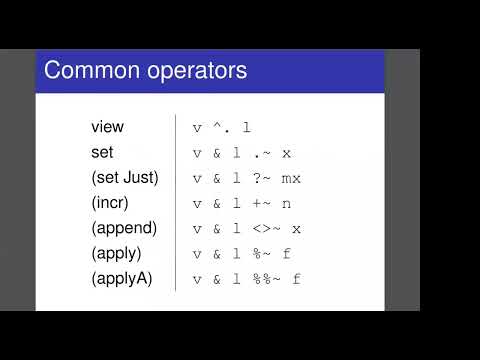
HN recommends it as the fastest way to learn lenses by example, with far-out examples later on.

HN points to it as the classic overview of why TLS certificate trust is flawed, and it resurfaces whenever CA or HTTPS security comes up.

HN people recommend it as the capstone of Hamming's course and as career advice about working on important problems.

Recommended as a forceful statement of the privacy case, though some commenters found its tone elitist and politically charged.

HN commenters point to it as an inspiring talk behind content-addressed designs like IPFS, Urbit and immutable URLs.

HN users share it as the quick demo that shows what Magit can do, for people unfamiliar with it.

HN recommends it as a terrific talk on APL readability and on the idea of idioms over libraries.

HN commenters cite it in voting-reform threads as a visual argument that cardinal systems (STAR, approval) beat plurality and ranked-choice voting.

HN people recommend it as a must-watch for anyone running complex systems, and some rewatch it regularly to remember its principles.

HN commenters cite it as the clearest case for why mobile devices are slow and why code-splitting and progressive web apps are needed.

HN points to it as a rare side-by-side of the TypeScript and Dart designers, often to show how the two approaches to improving JavaScript differed.

HN recommends it as the best introduction to Reason's motivations, straight from React's creator.

HN points to it whenever benchmarking pitfalls and layout effects come up, as an eye-opening talk on how unreliable naive measurements are.

Recommended as an approachable introduction to CRDTs and the local-first idea behind apps like Actual.

Recommended as the best demo of interactive, compiler-assisted dependently typed programming in action.

HN commenters recommend the series as the definitive history of BBS culture and its Fidonet roots, especially for nostalgia and the origins of the demoscene.

HN recommends it as a talk that changed how people debug, worth rewatching periodically.

Recommended as the quickest way to see what TeXmacs can do, as a WYSIWYG alternative to LaTeX.

HN recommends it as an illuminating, approachable explanation of distributed consensus.
HN refers to it as the main public description of Google's internal code analysis tooling, and as a precursor of ideas like LSP.

HN points to it as a fascinating talk that convinced many to buy air quality monitors, with citations to studies.

Recommended as a jaw-dropping, must-see talk that gives an amazing intro to static analysis alongside Might's personal story.

HN recommends it for the toybox intro and for Landley's candid account of software licensing and why he created the 0BSD license.
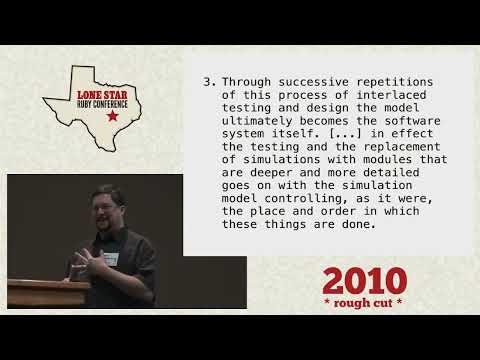
HN recommends it for changing minds about whether programmers can be called engineers, and for its take on how waterfall was misread.

HN returns to it whenever corporations as paperclip-maximizer AIs or AI risk come up.

Recommended as a first-hand account from NSA whistleblowers, often linked in surveillance and Snowden threads.

HN recommends it as the original LiveView announcement and demo, a compelling argument for server-side rendering as an alternative to JavaScript front ends.

Pointed to as the in-depth talk on exception mechanics and code size for embedded C++.

HN commenters recommend it as the authoritative, firsthand account of how X came to be and why it isn't GPL.

HN points to it as a clear lesson that algebraic properties like associativity unlock parallelism, applicable in any language.

HN cites it as a startling example of how advanced Lisp machine interactive graphics were, often in Lisp and REPL-driven development discussions.

Shared as a beautiful example of lattice-based harmony visualization.

Listed alongside his other talks as foundational context for Dynamicland and visual-programming ideas, and he is the most frequently cited speaker on such threads.

Cited as the more accessible companion to the paper, and as the most interesting treatment of AD via compiling to categories.

Cited whenever threads discuss recovering hidden images or non-line-of-sight imaging, as a clear demonstration of light transport.

Recommended during the await syntax debates for explaining the constraints that shaped Rust's async design.

HN shares it as a short summary of why copyright length matters and the history of Disney-driven term extensions.

Recommended as a vivid look at live, interactive programming environments and what Xerox PARC built on very limited hardware.

Recommended as the best introduction to property-based testing and cited for its examples of bugs found in the CAN standard.

HN people recommend it as a reading list of historical CS ideas worth knowing, and as a favorite among Armstrong's talks, especially after his death.

HN points to it as the best account of what Self made possible and what its team went on to do.

Recommended as the clearest explanation of Halide's ideas and of scheduling for performance.

Recommended as the case for blocking code and virtual threads over monads and async/await.

Cited in threads about Python's rise as a first-hand, entertaining account of why it won in scientific computing.

Strongly recommended as a gripping hour on K2 and on leadership and summit fever in extreme conditions.

HN recommends it as a balanced, eloquent take on the systemd debate that even skeptics find persuasive.

HN recommends it as an excellent talk on notation problems, useful when reading papers or designing a new metalanguage.

HN recommends the series as a practical introduction to nMigen and formal verification for CPU design.

HN links it whenever menu hover problems or nearest-to-pointer selection come up, and as proof algorithms matter in front-end work.

HN brings it up in any thread about German or European rail as a data-driven, entertaining analysis of why trains are late.

HN recommends it in literate programming threads as a rare look at applying the idea to a huge, complex codebase, though some find it meandering.

HN commenters recommend it as the lead ClojureScript developer's own account of Om's evolution, one-way data flow and single-state design.

HN commenters recommend it as an accessible introduction to scaling laws and to why cities keep growing while companies and organisms eventually die.

Strongly recommended as a formative talk on privacy, especially for its argument that voting with your feet fails as a privacy strategy.

HN commenters recommend it for the finding that idea exchange and connectivity drive productivity and wealth, which they apply to cities, offices and online communities.

HN commenters strongly recommend it as a thoughtful talk on tech worker ethics that has not aged.

The standard link in ranked-choice voting threads to show IRV does not eliminate the spoiler effect.

HN treats it as a phenomenal demonstration that voice-driven development is viable and as an eye-opener on accessibility-unfriendly coding habits.

HN recommends it as a comprehensive, still-accurate and often funny account of how zoning and policy force suburban sprawl.

HN recommends it as a rigorous clinical look at ADHD, including the view that it has no benefits and that external prompts help.

HN recommends it as the foundational talk behind FreedomBox and the case against centralized web services.

Recommended in incremental computation and reactive UI threads as the best conceptual overview of Incremental and incr_dom.

Praised as a standout, non-standard Strange Loop talk explaining the reasoning behind Uxn and resilient computing.
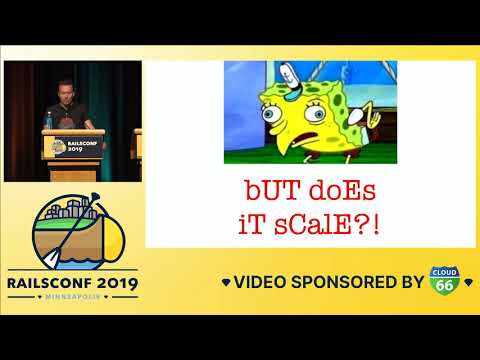
It is the go-to reference in debates about whether open source maintainers are owed compensation, and commenters say it is worth watching even for non-Rails developers.

HN recommends it in testing-strategy debates as the classic case for fewer integration tests and more small, well-contracted unit tests.

HN recommends it as an excellent speech from Watsi's founder, especially on keeping a nonprofit aligned with the people it serves.

HN commenters recommend it as an entertaining demonstration of how scanners and antivirus software fail on unexpected input.

HN commenters recommend it as a way to understand what the VPRI group considers core, such as supporting any syntax on one JIT compiler and removing boundaries between application and interpreter.

HN people share it as a striking demonstration of how much graphics a modern terminal can do.

HN commenters point to it as the author's own short explanation of Xanadu's core ideas, usually in threads on hypertext, linking and decentralizing the web.

HN commenters point to it as an alternative take on the data-fetching problem GraphQL addresses, and as a clear argument for when RPC or graph models beat plain REST.

HN readers recommend it as a thorough, practical introduction to Postgres fundamentals and optimization for application developers.

HN links it for Cantrill's entertaining epoll versus kqueue rant and his stories, such as bricking a machine with rm -rf.

HN engineers recommend it for its core insight that limiting concurrency naturally yields request-rate limits, and for its link to queueing theory.

HN points to it as a good introduction to Idris 2 and a striking demonstration of what dependent types enable.

HN recommends it as a phenomenal talk on Zig's C interop and on choosing between C, Rust and Zig for systems work.

Recommended in threads about long-lasting structures and passing knowledge across generations, as a long but fascinating talk.

HN users share it to build intuition about wave-particle duality and pilot-wave ideas in quantum mechanics threads.

HN treats it as one of the canonical Bret Victor talks, cited whenever discussion turns to better tools and interfaces for thinking.

HN commenters recommend it as a technically jaw-dropping talk, and it is the standard reference whenever the Night Watch gigapixel images come up.

Cited in Rust and systems-language threads as the best introduction to ATS, a language claimed to go beyond Rust's safety guarantees.

HN points to it whenever a company shuts down a service and wipes user content, as an entertaining case for digital preservation.

Recommended in DRY versus duplication debates for its visuals and its case that copy/paste can beat a wrong abstraction.

HN fans share it as a way to hear the game's philosophical, sci-fi quotes in sequence.

HN recommends it for getting the inventors of major concurrency models together, disagreements included.

Considered a favorite deep dive into how AWS does virtual networking at L3 and why VPC hosts cannot snoop each other.

Strongly recommended as the best explanation of the ruling, in more depth and with more accuracy than press coverage.

HN points people to it as the canonical demo of early interactive graphics, constraints and objects, and as one of Alan Kay's favorite things to show.

HN calls it a surprisingly fun, approachable talk on a hard problem and cites it in floating-point threads.

HN points to it whenever someone underestimates how hard email parsing, validation or building a mail client really is.

HN regards it as an inspiring, funny case for modest, bootstrapped success over venture-funded risk.
Which of these have you already seen?
Connect YouTube and HackerTube AI hides what you've watched and ranks the rest for you.