
HN repeatedly recommends it as the deepest public look at how iCloud Keychain and Apple's device and cloud security are designed.
Topics › Systems, Networks & Security
The best cryptography videos, according to Hacker News
89 videos about cryptography that Hacker News commenters keep pointing each other to, ranked by how many separate months they were recommended. Part of Systems, Networks & Security.

HN treats it as the go-to layperson-friendly argument against e-voting and links it in nearly every voting-technology thread.

The go-to recommended video for newcomers wanting a clear, visual explanation of how Bitcoin and blockchains work.

It is the go-to beginner explanation of Diffie-Hellman, recommended because the paint analogy makes the idea click without prior cryptography knowledge.

HN commenters repeatedly recommend it as the best explanation of why the CA system is broken and what alternatives exist.

A staple HN recommendation in crypto and Web3 threads as an entertaining, compelling case against blockchain.

It is the go-to long-form critique of crypto that HN commenters recommend whenever skeptics ask for a thorough, well-researched takedown.

HN keeps pointing to it as a long, fascinating talk on cryptographic, verifiable voting whenever e-voting security comes up.

It is the go-to short explainer HN commenters link whenever e-voting, voting machines or online voting come up.

Regarded as the definitive takedown of the metaverse hype and the Decentraland ecosystem.

Recommended as a great overview of what Bitcoin's protocol can do beyond simple payments, particularly contracts and smart property.

Frequently linked as an entertaining and alarming account of OpenSSL code quality and why the fork happened.

HN commenters call it one of the best, most unbiased explanations of what actually happened to Mt. Gox and its missing coins.

HN commenters point to it in election-security threads as an accessible explainer of how a vote can be verifiable but not sellable.

HN points to it as the classic overview of why TLS certificate trust is flawed, and it resurfaces whenever CA or HTTPS security comes up.

HN commenters recommend it as a compelling, if not definitive, argument for Adam Back as Satoshi whenever the identity question comes up.

HN commenters recommend it as the best single, entertaining overview of Tether's dubious history, and cite it when arguing Tether lacks real USD backing.

HN commenters recommend it as a corrective to enterprise blockchain marketing and as an explanation of what makes Bitcoin distinctive.

HN points to it as a short, clear explanation of why Enigma was breakable and how search-space elimination works.

HN commenters use it as a short, persuasive primer to send to non-technical people in debates over encryption backdoors and decryption legislation.

HN repeatedly recommends it as the best ground-up, non-hype introduction for people who want to understand what a blockchain actually is.

It is the go-to accessible explanation of zero-knowledge proofs, linked whenever a thread needs an intuitive introduction.

HN recommends it as a fascinating conversation showing how the Ethereum founder thinks.

HN recommends it as an entertaining talk and the original source on the stripping attack that motivated HSTS.

HN uses it as the go-to illustration of just how large 2^256 is.

Bitcoin advocates on HN cite it to rebut energy-consumption and waste criticisms, though it is an advocacy piece from a Bitcoin company.

Commenters call it clear enough to implement the algorithm from, and teachers use it in courses.

HN people recommend it as a clear explanation of encrypted messaging challenges and of the thinking behind Signal.

Recommended as a moderately formal, clear introduction to finite fields, useful beyond AES.

Cited by big-block advocates as evidence that Bitcoin could handle far higher throughput.

HN recommends it as a good starting point on practical Enigma cryptanalysis with modern hardware.

HN recommends it as a good overview of the NIST candidates and the state of post-quantum crypto.

HN commenters point to it as a clear, approachable explanation of Shor's algorithm and what quantum computers actually do.

HN commenters link it as a short, favorite explanation of Bitcoin's security and the sustainability of a 51% attack.

Recommended as the author's own explanation of the design and security of magic-wormhole.

Recommended as a funny, fascinating tour of how bad the OpenSSL code was and what cleanup looks like.

HN recommends it as a clear, worked explanation of Shor's algorithm for building intuition.

HN commenters use it in crypto debates as evidence that Bitcoin matters for people in unstable-currency countries.

Cited as the talk that introduced Upspin, and called fascinating and really good by commenters.

Cited as a must-watch persuasive case for HTTPS everywhere.

Recommended as a gripping real-world hardware hacking story and a showcase of Joe Grand's skill.

Commenters recommend it as an entertaining, accessible explanation of how bad the law is, including for non-technical audiences.

HN users cite it as primary-source testimony, especially for the argument that weakening encryption is security versus security, not privacy versus security.

Cited as a thorough statement of the bitcoin-maximalist case, with the host pushing back.

Recommended as a simple, non-mathematical way to understand key exchange.

Recommended as a rare insider look at Apple's security architecture and the reasoning behind its hardware choices.

HN recommends it as the primary source on Sony's ECDSA nonce-reuse blunder and the history of console cracking.

Cited in decentralization and federation debates as the key talk on the practical challenges, though some found it defeatist.

Recommended as a solid, level-headed academic introduction to blockchain, often noted because Gensler later led the SEC.

HN points to it as a good overview of Chip and PIN attacks and the consumer-liability downsides.

Commenters point to it as a short, high-level overview of how Lightning payment channels work.

HN recommends it as the video version of the argument that JOSE/JWT is a flawed standard, and as a help in understanding token design choices.

HN commenters sent it to newcomers as a short, simple first explanation of Bitcoin.

Recommended whenever ZFS encryption comes up as the authoritative explanation of how it was added and its trade-offs at scale.

Shared in web3 threads as a thoughtful conversation tying Brand's long-view thinking to the decentralization movement.

Recommended as the protocol designer's own detailed explanation of SCP.

HN recommends it as a clear explanation of self-custody and of why to move coins off exchanges.

Cited in encryption policy threads as a funny, accessible primer and for its fake Apple ad.

After the FTX collapse, commenters cited it as an early red flag, though others disliked the YouTuber's style.

Brought up in threads on encryption and quantum cracking as a fitting song about future decryption.
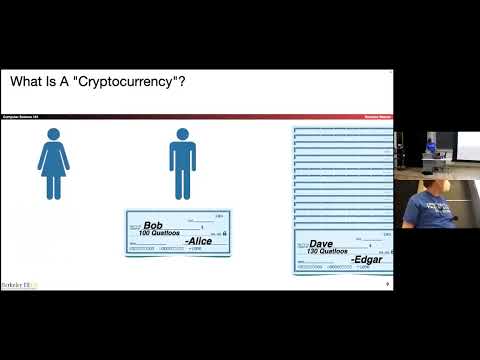
HN commenters offer it as an expert, skeptical overview of what cryptocurrency actually is and its weaknesses.

HN cites it as the best explanation of how Persona's provisioning and login work, and of why it used email addresses as identity.

The go-to short explanation whenever lava lamps, entropy sources, or Cloudflare randomness come up.

Recommended as a fun, detailed account of how the PS3's security was broken.

Cited in discussions of cryptocurrency, KYC/AML and financial surveillance as a framing of money as a tool of control.

It is linked as the original short demonstration that keys can be pulled from RAM after shutdown.

HN links it as a rare look inside a large Chinese mining operation, with its deafening machine noise and workers' conditions.

HN links it as the primary source for Buffett's bitcoin views and his argument about productive versus non-productive assets.

HN points to it to explain how passkeys work across ecosystems and are not proprietary.

HN commenters cite it, with a pointer to the section from about 10:00, when arguing that Lightning has no solved routing algorithm; most mentions are critical of Lightning.

Linked as the approachable explanation whenever HN discusses detecting or watermarking AI-generated text.

Cited as an accessible, documentary-style account of the XZ backdoor in supply chain security discussions.

Linked in crypto-mining threads for its picture of what nearby residents endure, though some commenters treat it as a case of corporations overriding locals.

HN points to it as an intuitive explanation of how NIST standardized a backdoored generator.

Cited as the classic real-world use of Morse code to smuggle out a message under duress.

HN commenters link it as a defense of Bitcoin's energy use, offered as a rebuttal to claims that mining is wasteful.

HN cites it for what SBF said himself, especially his claims about political donations and the backdoor allegation.

HN cites it in Monero and Zcash debates as a critique of decoy-based privacy and its passive and active attacks.

Mostly cited in critical or skeptical comments about Buterin, with a little admiration for the talk coming from a 19-year-old.

Mostly cited critically, as Apple's own defense of its scanning plans, which commenters found out of touch or unconvincing; one commenter says it adds nuance.

HN cites it as precedent for repurposing mining-only GPUs for graphics, in threads about Nvidia limiting mining on gaming cards.

Cited critically as an example of someone vouching for Mt. Gox just before its collapse.

HN mentions are thin and mostly cite it in Lightning Network discussions, as a reference point for that critical viewpoint rather than a recommendation.

Posted as a recurring joke every time Bitcoin's price crashes or hits headlines.

HN cites it critically, as an example of Tether executives dodging questions about reserves and backing.

HN cites it to show how seriously root key ceremonies are secured and to let people watch one.

Cited, usually critically, as a window into how payment companies view cryptocurrency and cash.

Cited in threads about Google's purchase tracking as the technical source for how the matching might work.

Cited as the source of Nelson's claim about Satoshi's identity, mostly as an amusing curiosity.
Which of these have you already seen?
Connect YouTube and HackerTube AI hides what you've watched and ranks the rest for you.