
HN repeatedly calls it the clearest introduction to waves and transmission-line behavior, better than modern explainers.
Topics › Physics, Space & Chemistry
The best everyday physics & science demos videos, according to Hacker News
166 videos about everyday physics & science demos that Hacker News commenters keep pointing each other to, ranked by how many separate months they were recommended. Part of Physics, Space & Chemistry.

HN's default recommendation for a friendly, thorough introduction to heat pumps and why they are so efficient.

HN repeatedly cites it as an elegant, eye-opening explanation of fire and photosynthesis and as an example of Feynman's infectious love of knowledge.

Whenever HN discusses seasonal affective disorder, myopia, or bright home lighting, people point to this as the most convincing buildable example of sunlight-like illumination.

HN repeatedly recommends it as a surprisingly magical explainer on color perception, often cited in color-space discussions.

Often recommended as an eye-opening field-based explanation of electricity, though it was also controversial and criticized as pedantic.
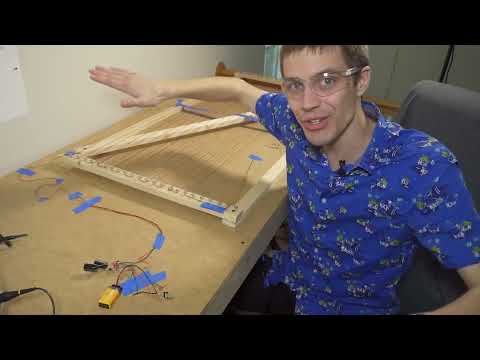
Praised as the clearest visual explanation of transmission lines, impedance and signal propagation, with several commenters saying it made it all click.

HN recommends it as a delightful breakdown of the cleverness in dumb appliances and an entry point to the channel.

Recommended as one of the best explanations of Fourier transforms and a clear demo of analog optical computing.

HN commenters recommend it as one of Veritasium's best videos and one that has aged well.

HN considers it among the clearest accessible explanations of what refractive index actually is and how light moves through transparent matter.

HN likes it as a fun, clear explainer of traffic waves and of the benefits of leaving gaps while driving.

It is the go-to demonstration of how hypoxia silently disables decision making, cited in threads on altitude, flying, diving, CO2 and breathwork.

Recommended as an entertaining, accessible way to get a feel for light and electric fields.

Praised as a masterpiece of science education that recreates Faraday's demonstrations.

HN calls it one of the best explanations of how atomic clocks actually work.

Go-to link when oxygen candles, CO2 capture or submarine air quality come up.

Cited in cooling and fan-noise threads as a short video with actual data on fan placement.

HN links it in threads on bikes, countersteering and control systems as the clearest demonstration of how bikes actually steer and balance.

HN repeatedly recommends it as an excellent explanation of why flying on Mars is hard and how the helicopter was built.

Cited in data center siting debates as evidence that noise and infrasound can seriously affect people living nearby.

Recommended across Prince Rupert's drop and glass threads for its striking high-speed footage.

HN links it whenever the Moon's orbit comes up, as a concise explanation of why the Moon always curves toward the Sun.

Commenters recommend it as a creative music video shot entirely in zero gravity, citing it in threads about parabolic flights and space.

HN cites it widely in discussions of tacit knowledge, habit, unlearning and adult versus child learning.

HN recommends it as a short, intuitive introduction to the pilot wave (de Broglie-Bohm) interpretation of quantum mechanics.

HN users share it to build intuition about wave-particle duality and pilot-wave ideas in quantum mechanics threads.

HN cites it for an insider's look at defense work and at how the military thinks about information operations and cyberspace.

HN uses it as the go-to demonstration of how unintuitive mass conservation is, especially in weight loss and burning threads.

HN commenters like it as a high-quality, accessible look at an under-appreciated engineering idea and bring it up in snap-fit and hinge discussions.

Recommended in launch threads as an immersive way to hear what a Falcon Heavy launch actually sounds like.

HN commenters point to it as a credible debunking of the popular but wrong explanations of how wings generate lift.

Recommended in moka pot threads as the best way to see how the pot works from the inside.

Cited whenever backup beepers and noise come up, as a clear explanation of the white-noise alternative.

Cited as the best explanation of mirror reversal.

Commenters link it as a quick, clear explanation of why twelve notes only approximate simple ratios.

HN commenters point to it as a fun, research-grounded explainer whenever bed bug threads come up.

HN uses it as a quick, clear demonstration of the Magnus effect behind spinning-cylinder ships and planes.

Recommended as the clearest footage of a whip tip going supersonic, and cited in shockwave discussions.

HN commenters link it to correct the widespread misconception about why light slows in a medium.

HN commenters recommend it for changing how they think about distributions and for showing how criticality shows up across earthquakes, wildfires and other fields.

HN recommends it as a good visual explanation of how cats land on their feet.

HN recommends it as an approachable, intuitive explanation of why visible photons can be surprisingly large, from a channel known for practical optics.

HN points to it for a clear explanation of photon sieves versus Fresnel lenses and for showing what interference patterns actually look like.

Frequently linked whenever wind-powered vehicles come up, as the clearest visual explanation of how the craft works.

Recommended as an expert-made DIY build that explains why the apparatus is designed as it is, though one commenter notes a missing baseline run.

HN commenters find the hypothesis elegant and the channel consistently thought-provoking, and point to it in threads on light, particles and wave functions.

HN recommends it as an accessible layperson's introduction to the Reynolds number and fluid dynamics scales.

Linked as clear demonstrations that make the counterintuitive faster-than-wind result click.
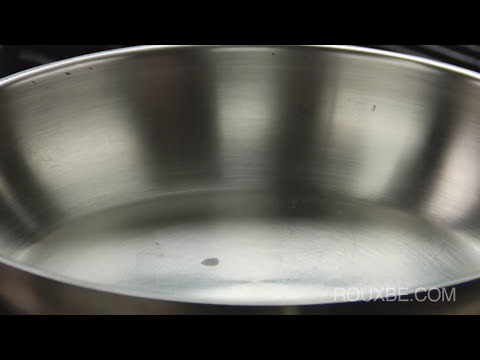
HN people cite it as a practical test for pan temperature and as the way to get a stainless steel pan relatively non-stick.

It comes up as a great explainer on magnetohydrodynamic drives and pumps in threads about silent submarine propulsion.

Cited in climbing knot threads to counter the claim that figure 8s jam, by showing the correct tying method.

HN commenters send it to people who think vaping is as harmful as smoking, for its graphic comparison.

HN commenters recommend it as an easy-to-digest explanation of time dilation and the twin paradox.

HN links it as a popular, accessible introduction to indoor CO2 and its effect on thinking, in air quality threads.
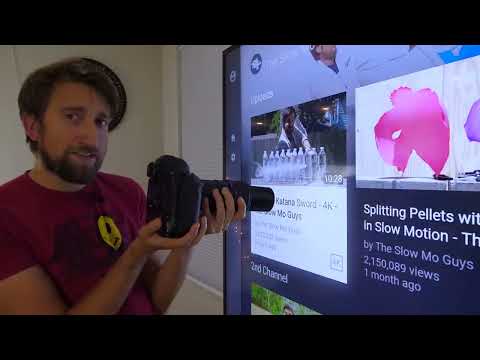
Frequently linked as visual proof of how a CRT's raster scan and phosphor decay work.

HN cites it as a practical demonstration that kerosene-type fuels are hard to ignite compared with gasoline.

HN recommends it as an eye-opening demonstration of why countersteering matters on two wheels.

Commenters recommend it for the striking glass-shattering visuals and the artist's attitude of treating failure as a space for discovery.

It is the standard link whenever a new Peltier or thermoelectric cooling breakthrough is posted.

HN uses it as the reference demonstration in lidar versus camera debates, though some critics fault its methodology and style.

HN commenters recommend it as a practical explanation of microwave hazards and shielding, and of using microwave ovens safely without an enclosure.
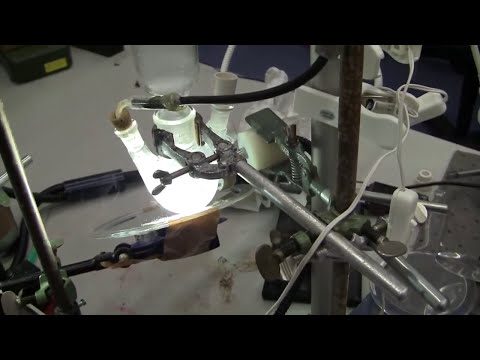
HN links it as the accessible video explanation of the sodium-in-water research, and when Coulomb explosions or sodium batteries come up.

HN mentions it as the famous, kid-delighting demo of fluidization, especially in sand battery and industrial process threads.

Recommended as an interesting experiment showing PEX tolerates freezing better than copper.

HN uses it as a vivid illustration of how little sustained power a human body produces, even a champion's.

Brought up in Tesla auto-wiper threads as the clear explanation of how simple conventional rain sensors work.

Commenters point to it as a clear explanation of the different types of night vision and why analog image intensifiers behave differently from digital ones.

HN recommends it as a cool, eye-opening look at the hidden ultraviolet world, especially in sunscreen and vitamin D threads.

HN uses it as vivid proof that modern fires develop much faster, which is the argument for working smoke detectors and early escape.

Linked in owl-feather and quiet-flight threads as a clear audio comparison.

HN commenters link it as a visual illustration of wingtip vortices and wake turbulence when discussing lift and aircraft wakes.

HN uses it as a vivid example of tacit knowledge and skill acquisition, where the brain eventually abstracts away the complexity.

HN users suggest it to anyone who enjoys extreme high-voltage projects and big capacitor-bank discharges.

HN links it in threads about silence and quiet rooms, as a good first-hand look at the anechoic chamber that debunks the madness myth.

Recommended as a detailed, wonderful explanation of the physics of dynamic soaring and record-speed RC gliders.

HN people link it as a quick, clear answer to the question of bicycle stability, including in threads on bike mathematics.

HN points to it as a clear, visual demonstration whenever a Tesla valve comes up.

HN commenters point to it in lighting threads for its pros and cons of LED versus sodium lamps, though one calls it almost right.

HN people cite it as the clearest layperson-friendly explanation of rotational instability whenever spinning bodies, tumbling objects or axis shifts come up.

Used as an example of Applied Science pushing the limits of garage engineering, in DIY microscope threads.

Recommended as a fantastic, scientist-led explanation of snowflake formation.

HN links it as an entertaining, in-depth rebuttal to 5G health fears from an electrical engineer.

HN mostly cites it as an example of the absurdly powerful lasers sold cheaply online, and a nod to the channel's DIY laser builds.

HN points to it in threads on radiative cooling as a hands-on explanation of passive daytime cooling.

Linked in threads on magnets and implants as a vivid demonstration of how violent MRI magnet forces are.

Cited as the canonical eye-catching demo of diamagnetic levitation, and sometimes used as a joke in magnet threads.

Commenters link it whenever bit flips, cosmic ray errors or unexplained computer glitches come up, as a good accessible explanation.

HN cites it whenever the popular absorb-and-re-emit explanation comes up, as a source for the wave-interference account.

Recommended whenever a thread asks how dangerous it is to fall into a reactor or fuel pool.

HN cites it as the original and still-wow reference whenever newer ultra-high-speed light imaging comes up.

Cited in Prince Rupert's drop threads as the best high-speed footage of a bullet hitting one.

HN cites it in double slit debates for its grounded demonstration of interference as classical wave behavior.

HN recommends it as an informative explanation of what those tags are, especially in threads about implants and RFID.

Linked in paper folding threads as a fun demonstration and as the video that made the channel famous.

HN points to it as a cool demonstration of cheap precision laser measurement and the origin of hacks based on self-mixing.

Cited as a striking, counterintuitive example of extreme thermal insulation and hard materials science.

Mentioned as a striking example of sound producing physical effects and a favorite among his videos.

Used as the go-to example of genuine one-million-fps footage and of bullet impact physics.

HN suggests it as a vivid, hands-on way to understand circuits, including for a blind child learning to program.

Cited as an example of ambitious video art and of a slow-motion real-time shot.

It gets linked in threads about salt and taste as a quirky, memorable curiosity.

It is the go-to demonstration HN links whenever traffic shockwaves, phantom jams or cascading failures come up.

HN points to it as the best accessible explanation of submarine ice breaking and sub controls.

HN points to it as the clearest and most striking explanation of femto-photography, with animations that make it easy to follow whenever related imaging stories appear.

HN commenters cite it as the author's own demonstration of research showing that bicycle stability is not explained by gyroscopes.

HN points to it as a demonstration of artificial daylight, especially for windowless or underground rooms, and to date the technology to 2014.

HN cites it as an intuitive demonstration of the Coriolis effect and the practical problems of spinning habitats.

Linked as a quick demonstration of the ion plane in threads about silent aircraft and flying cars.

HN commenters link it for electron micrographs of fresh versus worn bristles when toothbrush wear comes up.
Linked as the accessible explanation of how moire navigation lights work.

Cited as a benchmark for leaderless swarm behavior that robots and drones could aim to match.

HN cites it as the canonical work behind repeated re-recording experiments, and a pivotal piece of minimalist music worth listening to patiently.

Recommended as an accessible, well-delivered lecture on high-intensity laser physics.

Commenters cite it as the clearest demonstration of hypercentric lenses and of looking around objects with optics.

HN points to it whenever gallium or liquid metal comes up, as a vivid demonstration of gallium destroying aluminum.

HN commenters use it as a fun, accessible demonstration that color perception depends on surrounding patterns and that what we see differs from what the eyes register.
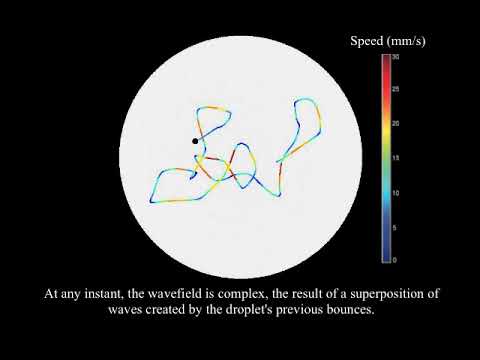
Cited in pilot-wave theory threads as a vivid visualization of how quantum-like behavior can arise in a classical system.

Pointed to as an approachable layperson's explanation whenever video magnification or vibration visualization comes up.

HN points to it in superconductor and LK-99 threads as evidence that YBCO can be made in a modest home lab.
Which of these have you already seen?
Connect YouTube and HackerTube AI hides what you've watched and ranks the rest for you.