
Recommended for years as the best technical introduction to memristors from the person who found the physical device.
Topics › Physics, Space & Chemistry
The best materials science videos, according to Hacker News
42 videos about materials science that Hacker News commenters keep pointing each other to, ranked by how many separate months they were recommended. Part of Physics, Space & Chemistry.

HN recommends it as a gripping story of single-minded persistence against the herd, and as the back story behind modern LED lighting.

HN points to it as an impressive, hands-on DIY demonstration of passive radiative cooling that works in practice.

Strongly recommended as a mind-bending, approachable explanation of aperiodic patterns, even enjoyable with kids.
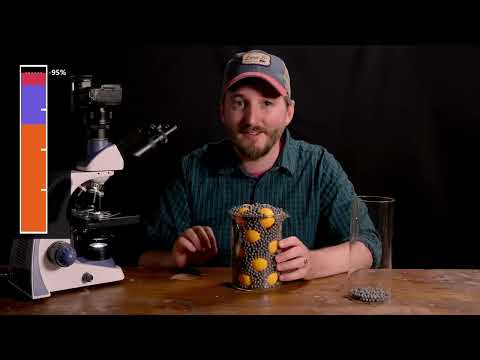
It comes up whenever radiative cooling coatings are in the news, as a hands-on DIY guide that shows the approach working with household materials.

HN points to it as a practical, well-researched DIY demonstration of passive radiative cooling.

Recommended as an amazing documentary of traditional ironmaking, often used as a baseline for the labor required.

Recommended across Prince Rupert's drop and glass threads for its striking high-speed footage.

HN brings it up as a nostalgic, exciting concept in threads on foldable phones and design, and sometimes as an example of concept videos that never shipped.

HN brings it up in energy storage threads as a promising scalable grid storage technology, and calls it worth the hour.

HN recommends it as a highly informative look at micro-etching glass and the smallest Tesla valves.

HN recommends it as a clear, balanced answer to claims that Roman concrete was better than ours.

Commenters send it to people asking how engines survive such temperatures, and call it fascinating and worth watching.

Commenters link it as an approachable explanation of concrete basics in threads about Roman concrete, construction and sand supply.

Recommended as a hands-on introduction to glass melting and chemistry and to Krasnow's channel.

Referenced as an inspiring example of a vision-of-the-future video with believable everyday uses.

Commenters recommend it for the striking glass-shattering visuals and the artist's attitude of treating failure as a space for discovery.

HN commenters use it as a quick, hands-on demonstration that steel loses strength well below its melting point.

HN recommends it as a hands-on introduction to XRF and a fascinating teardown showing the x-ray tube and beryllium windows.

Commenters point to it whenever 3D-printed metal parts come up, as a clear explanation of why they have poor fatigue life and material defects.

HN recommends it as an informative and entertaining look at how uranium glass is actually made.

Used as an example of Applied Science pushing the limits of garage engineering, in DIY microscope threads.

Recommended as a fantastic, scientist-led explanation of snowflake formation.

HN commenters cite it as proof that cutting-edge biotech is becoming accessible to home labs, much like computing in the 1980s.

HN points to it when discussing nanobots and microscale physics, including how things behave at tiny scales.

Cited in Prince Rupert's drop threads as the best high-speed footage of a bullet hitting one.

Cited as a striking, counterintuitive example of extreme thermal insulation and hard materials science.

HN commenters link it for electron micrographs of fresh versus worn bristles when toothbrush wear comes up.

HN mentions it as a fascinating example of chemistry persistence and as something people learned from, such as discovering purple gold exists.

HN points to it whenever gallium or liquid metal comes up, as a vivid demonstration of gallium destroying aluminum.

Cited as a striking example of atom-level manipulation and STM imaging, including the ripples viewers ask about.

HN points to it in superconductor and LK-99 threads as evidence that YBCO can be made in a modest home lab.

Linked as the go-to hands-on demonstration of how transparent wood is made and why scaling it to large pieces is hard.

HN brings it up as an alternative, fringe theory about pyramid construction, with one commenter saying it was proved by demonstration and analysis.

Pointed to for nice demonstrations of bendable glass, though commenters note it feels like an infomercial.

HN cites it as the go-to high-speed footage whenever Prince Rupert's drops come up.

Used as evidence that carbon wheels and rims are far tougher than their fragile reputation suggests.

Linked in superconductivity and levitation threads as the canonical quantum locking demo.

Cited as a reference for magnet safety, eddy currents and superconductor levitation in physics threads.

Cited repeatedly as a quick visual demonstration that solid-state or polymer batteries can survive abuse without igniting.

HN commenters link it as the making-of companion to IBM's atom stop-motion film.

Shared as a visualization of Ralph Merkle's theoretical work on molecular manufacturing.
Which of these have you already seen?
Connect YouTube and HackerTube AI hides what you've watched and ranks the rest for you.