
HN treats it as the canonical, near-universally recommended lecture on giving talks and presentations.
Topics › Ideas, Learning & Language
The best university lectures & courses videos, according to Hacker News
125 videos about university lectures & courses that Hacker News commenters keep pointing each other to, ranked by how many separate months they were recommended. Part of Ideas, Learning & Language.

One of the most consistently recommended lecture series on HN, praised as fascinating, funny and eye-opening about human behavior across many scales.

HN users repeatedly say it changed how they think about writing, calling it a masterclass useful far beyond academia.

Recommended again and again as the best accessible overview of fusion physics, useful for judging fusion announcements and understanding why high-temperature superconducting magnets matter.

HN returns to it repeatedly as the best single introduction to understanding clinical depression.

One of the most frequently recommended online lecture series on HN, praised for giving people vocabulary to examine ethical positions and for Sandel's skilled teaching.

Perennially recommended as an inspirational talk for people facing setbacks or choosing a direction, and a source of oft-quoted lines like the brick wall.

HN people recommend the SICP lectures as a deeper, livelier route into the book and a formative course even for seasoned programmers.

Seen as a classic and often the moment programming 'clicks'; commenters praise Abelson's opening that computer science is not about computers.

A perennial HN recommendation for building intuition about exponential growth, cited whenever endless growth, energy or population come up.

Recommended as the rigorous, math-heavy original course, deeper than the Coursera version, for learning machine learning.

Repeatedly recommended in education threads as the definitive talk on why lectures fail and what works better.

HN cites it often in debates on inequality, cost disease and stagnant middle-class income, praising its data-driven approach.

Frequently recommended as an excellent, clear introductory RL course from the lead of AlphaGo, pairing well with Sutton and Barto.

HN frequently calls it the best single video on git because it teaches the underlying data structures.

HN commenters repeatedly recommend Barkley's lectures as the best introduction to understanding ADHD.

HN commenters repeatedly name it as the friendliest entry point to category theory for working programmers.

HN regulars treat it as an essential, fun Hofstadter talk for any discussion of concepts, analogy and metaphor.

Several HN commenters credit the lecture series with helping them through depression or personal collapse and recommend it as long-form learning.

Frequently recommended as the clearest plain-language explanation of what a computer fundamentally is, with at least one commenter saying it changed how they think about programming.

HN people recommend it as a masterclass in explaining physics clearly without condescension, accessible without formal training.

Frequently recommended as the best free university course on database internals, praised for depth and Pavlo's presentation.

HN recommends the series as a thorough, non-dogmatic look at meaning, spirituality and escaping nihilism.

During the 2022 Ukraine war threads, HN commenters recommended it as a non-Western perspective on Russia-West relations and Putin's motives.

Frequently recommended as a delightful, influential way to think about story structure.

Recommended as a clear, lucid way to learn Paxos and Multi-Paxos, ideally alongside the companion Raft video.

Recommended as a clear, authoritative lecture series on plausible origin-of-life theories.

HN commenters offer it as a dry but fascinating, hype-free introduction to Cascadia earthquake risk and the evidence for past events.

Strongly recommended as an accessible, well-taught history of Ukraine and a counter to propaganda narratives.

Recommended as an easy-to-follow math history course that gives perspective on the subject.

Recommended as a sober, physics-based account of how energy underlies the economy.

HN recommends it as a crash course on audio reproduction science, especially the finding that listeners reliably prefer more accurate speakers in blind tests.

HN fans love it for Knuth's humor and for how he makes open math problems feel approachable, and it is often cited for details like dancing links and counting rectangle subdivisions.

HN regularly recommends the series as a free, accessible, theory-oriented course on distributed computing that complements his book Designing Data-Intensive Applications.

Recommended as the standard free course for learning distributed systems from real papers.

Recommended repeatedly in 'where do I start with ML' threads as a clear, math-aware introduction.

HN commenters recommend it as a practical, memorable guide to prioritization, and some rewatch it every year.

HN repeatedly recommends this series as a clear, step-by-step way to really understand Kalman filtering.

HN recommends the series as an approachable but rigorous way to learn control theory, with good production quality.

HN recommends it as the clearest long-form explanation of the everything-is-fields view for non-physicists.

Treated as the classic lecture on why people misjudge exponential growth, and pulled out in threads on compound growth, epidemics, crypto and resource limits.

HN recommends it as a thought-provoking talk from a researcher with early GPT-4 access, especially for the unicorn degrading under safety tuning.

HN recommends it for a deep theory of why music sounds the way it does.

HN recommends it as a classic, clear introduction to Aurelius, with some saying it helped through hard times.

HN recommends Herb Gross as an unusually clear teacher whose explanations make calculus click for people who struggled elsewhere.

Repeatedly recommended in best-talks threads as a fun, mind-blowing demonstration of unexpected computation.

HN people recommend it as the capstone of Hamming's course and as career advice about working on important problems.

HN people recommend Su's lectures for building real analysis intuition, citing his phenomenal teaching style.

HN recommends it as a free, serious introduction to digital and computational photography from a professor who helped build the early Pixel cameras.

HN recommends it as an entertaining, clear explanation of nuclear weapons basics from a policy expert.

HN regularly recommends Hamming's lecture series as a fascinating, wisdom-rich course on how to approach hard technical problems and a career, often preferred to the book.

Recommended as a free, first-principles finance course for software engineers wanting to learn business and finance.

HN commenters recommend it as a clearer introduction to Raft than the paper and as part of a well-designed understandability study.

Commenters recommend it as a clear, characteristically engaging Susskind lecture for people trying to grasp the entanglement and gravity connection.

HN commenters recommend the series as timeless startup advice from strong speakers, and cite specific points from Altman and Moskovitz.

During 2022 HN threads, commenters shared it as the realist counter-perspective to understand the Russian position, though others dispute his record.

HN recommends it as a rigorous clinical look at ADHD, including the view that it has no benefits and that external prompts help.

Recommended as a clear introduction to dynamic programming from a well-regarded instructor.

Commenters rate the whole playlist as high-quality, clear teaching that builds foundations from memory and machine instructions up to different paradigms.

Recommended in game-theory and cooperation threads, with the whole lecture series endorsed.

HN founders recommend it as a must-watch on recognizing real product-market fit and avoiding solutions in search of problems.

HN commenters recommend it as a way to understand what the VPRI group considers core, such as supporting any syntax on one JIT compiler and removing boundaries between application and interpreter.

HN fans say it offers value even to atheists by interpreting Bible stories as psychological and evolutionary archetypes, and some credit it with helping them through depression.

HN commenters recommend it as a simple, direct entry point for beginners who want to learn computer science, not just programming.

HN recommends the lecture series as a foundational, wide-ranging grounding in modern global politics.

Cited in many threads about academic incentives, paper counts and why academia struggles to produce working software.

HN recommends it as an approachable, numbers-driven overview of what renewable energy would take.

HN recommends Sapolsky as an exceptional storyteller and points to this lecture on the biology of human behavior and violence.

Recommended on Ask HN threads as a high-quality free probability course for relearning math or building an ML foundation.

Recommended as one of the best free courses for learning modern deep learning for NLP.

HN recommends it, and the whole course, for understanding the brain and language acquisition.

HN recommends it as the best talk on concatenative languages and their mathematical properties.

HN recommends the series as an entertaining, serious route into physics for self-learners comfortable with basic math.

HN commenters recommend it as an emotionally powerful life-advice talk and revisit it as a reminder of mortality.

Recommended as part of a long lecture series on psychology, complementing biology lectures, and named when HN asks for the best lecture series.

HN people return to it as a clear primer on MCMC and HMC and on why high dimensions behave counterintuitively.

HN recommends it as a fast, accessible way to start learning Python.

Recommended as the source for counterintuitive high-dimensional geometry and described as an eye opener.

Recommended as a moderately formal, clear introduction to finite fields, useful beyond AES.

HN recommends it as a clear, high-quality introduction to succinct data structures from a leading authority.

HN commenters point to it to show how strange and mechanical cellular machinery is, and to explain how kinesin walks along microtubules.

HN recommends Sipser's free lectures as the companion to the standard theory of computation textbook and a path to understanding how computers fundamentally work.

Recommended as an enjoyable, clear introduction to information theory that pairs well with MacKay's free textbook.

Recommended as the detailed technical account of exactly what happened at Chernobyl.

HN users recommend it as a good discrete math course for programmers, praising Leighton's relatable stories that motivate new concepts.

HN recommends it to newcomers as a clear explanation of attention, including the query/key/value intuition.

Recommended as a companion to reading the dense book.

Recommended as a fascinating insider account of how the F-22's software makes it easier to fly than a Cessna.

Recommended as a more approachable introduction to category theory than the more formal lecture series people often start with.

HN recommends Susskind as a very good explainer who uses real math at an accessible level, and links this lecture series for self-learners.

HN repeatedly quotes its thesis that humanity's greatest shortcoming is failing to understand the exponential function.

HN uses it as the expert primer on burnout that dispels common misconceptions.

HN recommends it as an accessible and elegant tour of how indirect reasoning builds up cosmic measurements, with one commenter calling it their favorite Tao work.

HN considers the course one of the best hands-on ways into deep learning, praising the code-first teaching style.

Recommended as a solid introduction to personality and IQ research, and cited as the source for factor-analysis claims about personality and intelligence.

HN recommends it as the best short exposition of Singer's argument for a duty to give.

Pointed to during self-driving news threads as an insider view of Waymo's progress, deep learning's role and its limits.

HN recommends Boyd's lectures as a fantastic, often funny follow-up to linear algebra and as a step in machine learning study paths.

HN rates the series as one of the best physics lecture courses on YouTube, with an engaging format and historical context.

Cited in discussions of analogy-making in science, and revisited by fans of Hofstadter.

HN commenters point to it as a thorough, free lecture series for anyone wanting the nitty-gritty of GPS and GNSS.

Recommended as a much easier way into Baudrillard's ideas than reading his own writing.

Recommended when religion, mental health or psychedelics come up, for Sapolsky's biological framing.

Recommended as a solid, level-headed academic introduction to blockchain, often noted because Gensler later led the SEC.

HN suggests it as a free lecture for beginners that eases them into writing readable, reusable code.

HN mentions it with caveats: despite the author's reputation, commenters say it contains good investing and Excel material.

Cited as a watchable early introduction to deep learning from its pioneer, and remembered as a mind-blowing moment in the field.

Recommended for realistic engineering detail on extracting heat from a tokamak.

Pointed to as a lay-audience explanation of nuclear waste, safety and economics.

HN commenters cite it for NVIDIA's perspective on AI hardware efficiency, including logarithmic number formats and energy use.

HN recommends the CS231n lectures as a solid, applied deep learning course for self-study.
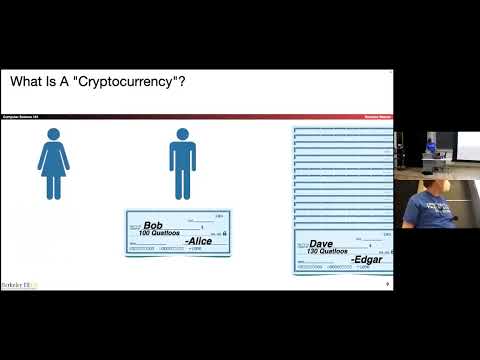
HN commenters offer it as an expert, skeptical overview of what cryptocurrency actually is and its weaknesses.

HN lists it as a free, brilliant introduction to deep learning and computer vision, often within ML self-study plans.

HN points to it as an accessible, interesting talk on molecular dynamics and simulation-based drug discovery.

HN holds the SICP lectures up as joyful classics, and this lecture as the moment the evaluator is revealed.

HN commenters hold it up as an unmatched introduction to programming and quote Sussman's line that knowing a spirit's name gives you power over it.

Recommended as a lecture so clear that no formal training is needed to follow it, and cited on why math is needed for physics.

Commenters cite it as a classic of physics lectures for laypeople that they watch and rewatch, though the audio quality is noted as poor.

HN cites it as a real academic source to back up or correct claims about emotion, anger and anxiety in the brain.

HN points to it, including Gjengset himself, as a more digestible way into partially-stateful dataflow than the thesis text, mostly in caching and database threads.
Which of these have you already seen?
Connect YouTube and HackerTube AI hides what you've watched and ranks the rest for you.