
Recommended during Afghanistan withdrawal threads as a sobering look at why the transition to local forces was failing.
Topics › Politics, History & Society
The best geopolitics & foreign policy videos, according to Hacker News
144 videos about geopolitics & foreign policy that Hacker News commenters keep pointing each other to, ranked by how many separate months they were recommended. Part of Politics, History & Society.

After the 2022 invasion, commenters spread it widely as an eye-opening explanation of Russian mindset, corruption and propaganda, though a few doubt the presenter's rigor.

HN recommends it as the quickest clear overview of the Brexit options, though later commenters note it predates the final outcome.

HN recommends it as a sobering, still-relevant look at the geopolitical consequences of warming, including why official reports lag the data.

During the 2022 Ukraine war threads, HN commenters recommended it as a non-Western perspective on Russia-West relations and Putin's motives.

HN commenters link it repeatedly in colonial history threads as an eloquent, fact-dense short speech.

HN users recommend it as an excellent, accessible overview of how modern chips are produced and why EUV matters.

Strongly recommended as an accessible, well-taught history of Ukraine and a counter to propaganda narratives.

Frequently posted in early COVID origin and lab-leak threads as a compelling early case, though other commenters cite rebuttals and note it is speculative.

HN commenters use it as a short, accessible primer on social credit and surveillance-driven gamification, linking it in many privacy and China threads.

HN commenters bring it up in threads on propaganda, influence operations and platforms like TikTok, saying it feels more relevant than ever.

Cited in propaganda and disinformation threads, though some commenters present it more as a prediction of current events than established analysis.

HN users shared it during the early 2022 invasion as a clear, map-driven overview of Russia's economic and strategic motives.

HN commenters recommend it as a clear explanation of how disinformation campaigns work and where today's tactics came from.

HN recommends it as real on-the-ground reporting on how banned GPUs get into China despite export controls.

HN commenters recommend it as a rare, eye-opening look inside North Korea, though one notes such tours are staged.

During 2022 HN threads, commenters shared it as the realist counter-perspective to understand the Russian position, though others dispute his record.

HN commenters recommend it as a concise, captivating introduction to the Hong Kong conflict during the 2019 extradition-law protests.

HN cites it as a striking confession obtained through caller ID spoofing and social engineering.

Praised as a remarkable piece of social engineering, spoofed caller ID plus pretexting, that produced direct evidence of the poisoning.

HN uses it as the go-to short video when threads compare Chinese and US rail and infrastructure.

HN points to it as an accessible, well-made mix of education and entertainment for anyone wanting to understand the Xinjiang situation.

HN commenters link it to argue that cultural subversion and normalization are playing out today, though mostly as a reference in unrelated threads.

HN recommends it as an in-depth look at the mechanics of intelligence work from a veteran who ran a nonproliferation operation.

Recommended as an accessible, powerful introduction to severe urban air pollution, remembered also for being banned in China.

HN commenters recommend it as an interesting on-the-ground perspective on Confucius Institutes and Chinese influence operations.

Recommended as a non-technical, concrete case study of how metadata and phone records expose covert operations.

Recommended as a documentary telling the early hacking and spy-hunting story, with the original people involved.

HN recommends it as a good introduction to Russian authoritarianism, though some commenters say it is flawed or wrong on many points.

HN recommends it as a fun, well-made documentary on Soviet planning, Gosplan, and why central control failed.

HN commenters point to it as a quick factual primer on EU institutions when threads get into EU politics and policy.

HN recommends it in discussions of China's surveillance and social-credit systems for explaining Chinese attitudes toward the state.

HN recommends it as an entertaining overview in any thread about border oddities.

Recommended as a long, insightful conversation that gives a view of how Greece was pressured during the bailouts.

HN links it whenever airline route rules, cabotage or loopholes come up, as a concise background explainer.

HN cites it as first-hand, independent reporting on Xinjiang that does not rely on state-sanctioned access.

HN commenters use it in crypto debates as evidence that Bitcoin matters for people in unstable-currency countries.

HN posts it, often jokingly, as a prescient and witty explanation of Britain's ambivalent stance toward Europe, especially around Brexit.

HN mostly uses it as a reference for a skeptical take on Russiagate media coverage, and some link it to give context on the reporter.

Recommended for its bleak take on globalization, energy and food supply, though some commenters question how objective it is.

HN commenters recommend it in college-ranking and higher-ed threads as an explanation of why rankings are a hustle for foreign student revenue.

Commenters point to it as a well-researched explainer of the history and culture behind China's current position, despite the political title.

HN points to it as a compact, reasoned case for Russian responsibility, though at least one commenter found the argument unconvincing.

Recommended as a long but insightful explanation of how corruption works inside institutions.

HN recommends it as an amazing, entertaining talk and cites it in threads on power-line sabotage and coup tactics.

Pointed to as an in-depth, journalistic account of Brexit's economic aftermath.

HN cites it in TikTok ban debates as the accessible summary of how Douyin and TikTok differ.

HN points people to it as the short, accessible account of how Stuxnet was dissected, usually when Stuxnet or state-sponsored malware comes up.

Offered as a concise summary of Russian security concerns and why Russia reacts as it does to NATO and Europe.

HN points to it as the best source on why these barges are designed for invasion and how they overcome limited landing beaches.

HN commenters recommend it as an accessible, level-headed explanation of the UN definition of genocide in heated Gaza threads, though one notes it omits some context.

HN recommends it in threads about sanctions and Russian military electronics, as an explanation of Russia's semiconductor limits.

Some recommend it for his geopolitical framing, including a prediction of the Russia-Ukraine conflict, while others found his candor about US policy shocking.

HN commenters cite it in threads on China's housing glut and construction quality as visual evidence of poor, empty new buildings.

HN commenters share it in chip fab and industrial espionage threads as a well-researched account of East Germany's failed microelectronics effort.

Recommended as a high-level, in-depth take on SMIC's 7nm progress and Asian chip manufacturing.

HN points to it as a visual explainer of enclaves, exclaves and counter-enclaves, especially in threads on the India-Bangladesh exchange.

Offered as a starter for people wanting to understand China's demographic crisis and how it threatens economic growth.

HN points to it for its account of propaganda that sows distrust and confusion, and as a starting point for Adam Curtis's work.

HN commenters cite it in political and disinformation threads as a source on Soviet psychological operations, a contested claim.

HN commenters cite it as a source for US-backed coups and foreign policy contradictions, and as an example of a video they say YouTube suppressed.

Mostly cited as a source for the demoralization and subversion idea, though one commenter dismisses it as alt-right material.

Recommended as a well-produced investigation and cited as evidence of oligarch wealth around Putin.

Cited as a satirical counterpoint to Western news claims about North Korea, including debunking the compulsory haircut myth.

Cited in threads on borders, Taiwan's status and how many countries exist, as a quick explanation of why recognition is political.

HN links it as the source for the claim that every post-war president would be indictable under Nuremberg standards.

HN commenters mostly cite it in political threads as a theory of subversion, and several mentions are repeated drive-by posts.
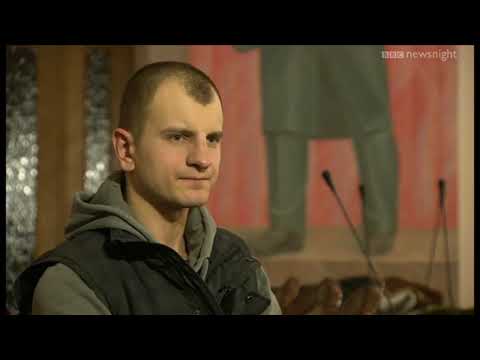
Cited in Ukraine and Russia threads as older mainstream coverage of far-right groups in Ukraine, mostly as a reference in political arguments rather than recommended viewing.

Cited in HN threads on the 2022 Canadian trucker convoy and emergency powers as an example of criticism of Trudeau from a liberal commentator.

Cited in threads on Chinese lending and the Belt and Road as an informed firsthand view from a former Greek finance minister.

HN commenters link it as a history of Palestine's colonization, though others dismiss it as propaganda.

Cited as a vivid demonstration of the scale of Chinese state surveillance, especially in TikTok and privacy debates.

Cited in nuclear-risk threads as evidence that Castro was ready to use nuclear weapons and accept the consequences.

HN uses it as a visual reference for hand-built firearms and craft gunsmithing, especially in threads on 3D-printed and home-made guns.

Shared after 2022 as evidence that McCain accurately predicted Russian aggression and the cost of showing weakness.

It comes up in discussions of magnetohydrodynamic propulsion as a long explainer from an MHD specialist.
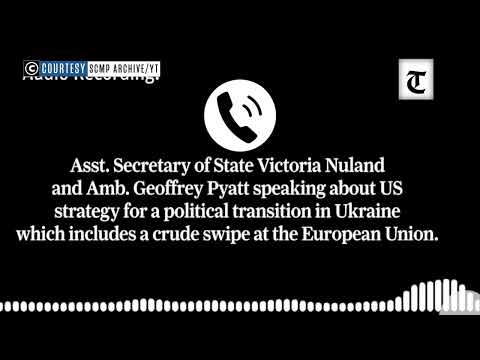
HN commenters cite it as primary-source audio in geopolitical arguments about US involvement in Ukraine, favoring listening to the call over reading the transcript.

Cited during the 2022 invasion threads as the realist expert position on the Ukraine crisis, though some commenters see it as Russian apologism.

Cited in threads on American decline, civil unrest and economic crisis as a classic statement of the imperial-decay thesis.

HN cites it as a concise explanation of why WeChat's super-app model is so dominant and why people worry about copycats.

HN cites it as a stage-managed press tour of the camps, useful for seeing what was shown and what was hidden.

HN commenters use it as a source for Paine's continental-versus-maritime framework and her views on sanctions when discussing geopolitics.

Recommended for historically grounded analysis of Putin, and praised as an example of releasing full-length interviews.

HN commenters mostly cite it as an investigative documentary on lobbying and influence operations in UK politics, with some presenting it as a critical exposure of the lobby's tactics.

Recommended as useful background on Russia's growing influence in West Africa and France's role there.

HN cites it as a primary source for Russia's grievances over NATO expansion, mostly in threads about Ukraine.

In 2022 some HN commenters shared it for historical context on Ukraine, usually with caveats about its bias and accuracy.

HN uses it as shorthand for incremental aggression and escalation, in threads on geopolitics, trade and creeping encroachment.

Linked as the famous clip of Trump scolding Germany over Russian gas, whenever European energy dependence comes up.

HN points to it as an alternative to GDP for measuring national progress and as background on the Good Country Index.

Posted as a reference clip in geopolitical threads about Israel and US policy, not as a recommendation.

Cited as evidence of slave markets in Libya, usually in arguments about Western foreign policy.

Linked as a critical example of official indifference to civilian costs of foreign policy.

Used as a joke whenever a stray or malfunctioning Russian munition is in the news.

Cited in Ukraine and Russia threads as evidence of US involvement in the 2013-14 protests.

Cited in energy-crisis threads as evidence that Germany's dependence on Russian energy was flagged years before 2022.

Mentioned only in passing, cited as support for claims that US interventions were driven by resources and that Western war reporting is biased.

Cited as a short explainer when Antarctic governance comes up, including as an analogy for governing Mars.

Cited as a visual reference in discussions of social credit, surveillance and facial recognition in China, usually with a dystopian framing.

HN commenters cite it as evidence in arguments over who was behind the Nord Stream sabotage, quoting Biden's statement.

Cited in 2022 energy-crisis threads, mostly critically, as proof that Germany was warned about Russian gas dependence.

Cited critically in political threads about US foreign policy and Libya.

HN commenters point to it to explain the religious motivations behind US evangelical support for Israel.

Cited for the concept of vranyo and as an explanation of how corruption and cultures of lying cause failures.

HN commenters cite it as primary-source evidence that the public was misled about the second Tonkin attack.

HN cites it for Huang's own words on TPUs and on opposing export restrictions to China.

Cited in Ukraine threads as primary-source evidence of US involvement in Ukrainian politics.

Cited critically in threads on Israel and Palestine as an example of settler takeovers.

Mostly cited as a joke about Australian defence and geopolitics.

Cited as a fast, entertaining explanation of EU membership tiers when EU politics comes up.

Repeatedly cited in Nord Stream sabotage threads as evidence of stated US intent toward the pipeline.

HN cites it mainly critically, for a clip in which Biden talks about getting a Ukrainian prosecutor fired.

HN commenters cite the clip critically as evidence of US sanctions policy and its human cost.

Cited mostly critically as evidence of Zuckerberg courting the Chinese government.

HN brings it up in Iran-related threads as a critical or darkly joking reminder of casual hawkish rhetoric.

Cited, almost always critically, as evidence of Chinese influence over the WHO during the Covid pandemic.

HN cites it as evidence in arguments about European dependence on Russian gas and NATO spending, especially after Russia's 2022 invasion of Ukraine.

Not recommended as viewing; it is cited in Ukraine and geopolitics arguments as evidence of alleged US involvement in Ukraine's government.

HN commenters cite it as a source on Soviet subversion tactics and propaganda, usually in political threads.

Shared as a joke or classic illustration of government process and strategy in unrelated political threads.
Which of these have you already seen?
Connect YouTube and HackerTube AI hides what you've watched and ranks the rest for you.