
Held up as a marvel of pedagogy and the best explanation of differentials, recommended again and again.
Topics › Engineering, Transport & Making
The best mechanical & precision engineering videos, according to Hacker News
141 videos about mechanical & precision engineering that Hacker News commenters keep pointing each other to, ranked by how many separate months they were recommended. Part of Engineering, Transport & Making.

HN repeatedly recommends it as the definitive, mind-changing explanation of dishwasher use, even though it runs over 30 minutes.

HN commenters repeatedly recommend it as a beautiful, approachable explanation of analog mechanical computation, and many have rewatched it.

HN returns to it again and again as a favorite example of elegant, chip-free mechanical engineering that beats modern toasters.

HN treats it as the classic demonstration of how analog mechanical computation works, especially the differential gear section.

It is a go-to recommendation whenever cans, good design or mass-produced objects come up, and many also recommend the whole channel.

HN commenters repeatedly recommend it as a half-hour mini-documentary on how precision is bootstrapped from scratch, relevant to machining and chip manufacturing threads.

HN commenters call it an absorbing, entertaining deep dive on elevator security and the go-to link whenever elevators come up.

Commenters recommend the series whenever Fourier analysis or analog computing comes up, praising Hammack's clear explanations and the short episodes.

HN repeatedly cites it as the best skeptical engineering analysis of why Hyperloop is impractical.

HN brings it up in any thread about elevators or physical security as a fascinating, entertaining deep dive.

HN commenters call it one of the most entertaining and informative con talks, and a good window into elevators from a hacker's view.

HN loves it as an example of old-school instructional film that makes how a differential works fully understandable in clear, simple language.

HN repeatedly recommends the series for its extraordinary craftsmanship and its credible demonstration of how the mechanism could have been made.

HN recommends it as a delightful breakdown of the cleverness in dumb appliances and an entry point to the channel.

HN points people to it as a deep dive showing how complex logic was built without computers.

Recommended in threads on analog computing, photonic chips, AI hardware and tide prediction as an engaging history of Kelvin's machines.

It is held up as a model of clear, well-paced educational film and of the old-era instructional style.

HN recommends the series as an approachable but rigorous way to learn control theory, with good production quality.

HN recommends it as a clear, enjoyable look at why simple designs are brilliant, and as a pointer to a channel with a hacker's-eye view of everyday technology.

HN commenters recommend it whenever the Selectric comes up, as a short, excellent explanation of its internals.

HN commenters send people here as the best accessible starting point for understanding why Raptor and fuel choice matter for Starship.

HN points to it as a favorite teardown, usually when discussing Dyson or how products are engineered and built, with some noting the host was impressed by the engineering.

HN links it in threads on bikes, countersteering and control systems as the clearest demonstration of how bikes actually steer and balance.

Recommended as a gold-standard free course for anyone learning to build precision mechanical things.

HN commenters point to it as the start of a gripping, wonder-inducing build saga by a prolific maker of ambitious mechanical projects.

Used as the canonical reference for the jargon-parody trope, and as a joke whenever technobabble appears.

Recommended as an absorbing masterpiece of craftsmanship, often raised in threads about watches and clockmaking.

HN points to it in lock-security threads as a good example of engineering meeting real-world exploitation, where flaws unrelated to the headline mechanism get found.

HN commenters point to it as a nice introduction to micromouse and maze-racing robots.

Recommended in threads about long-lasting structures and passing knowledge across generations, as a long but fascinating talk.

Recommended whenever rocket engine cycles or turbopumps come up, as a clear introduction from a trusted explainer.

Commenters repeatedly recommend it in JWST threads as a great explanation of clever mechanical design that is accurate and long lasting.

HN commenters like it as a high-quality, accessible look at an under-appreciated engineering idea and bring it up in snap-fit and hinge discussions.

Recommended as a clear, charming explanation of how machines work, including a demonstration of building an electric motor.

HN recommends it as the clearest visual explanation of how the Prius power-split hybrid actually works.

HN commenters recommend the series for its in-depth, hands-on explanation of how V2 turbopumps and peroxide decomposition work.

HN recommends it as an exceptionally well-made explainer of complex mechanical machinery.

HN recommends it as an engaging look at how an organ works as a whole orchestra, in threads about organs and live-coding them.

HN points to it as the clearest hands-on explanation of how Toyota hybrids work.

HN people link it as a satisfying demonstration of hand-powered drills being made from nothing.

HN recommends the channel and this video as an explanation of how machine tools enabled modern manufacturing.

Recommended as a thoughtful, enjoyable 45-minute dive into measurement and the appreciation of precision.

HN people recommend it, along with the Lock Picking Lawyer's response, as an engaging look at lock design and how clever mechanisms get bypassed.

Recommended whenever door handles or car reliability engineering come up, as an enjoyable look at design iteration.

HN recommends the series as an entertaining way to learn how everyday machines work, enough to start debugging them.

HN calls it a great, impressive engineering project involving real-time trajectory calculation.

HN recommends it as an accessible in-depth explanation of how Webb works and why its deployment was remarkable.

HN recommends it as the best explanation of why engine start is hard and what can go wrong.

HN commenters recommend it as the physical-machine take on replicating handwriting, with plenty of explained iteration.

HN likes the clear animation of how slip rings and piping let a house rotate.

HN treats it as the more informed, balanced take on SpinLaunch's tradeoffs.

Recommended as an eye-opening look at pre-computer automation and relay logic.

HN recommends the series as a fascinating, practical course in precision prototyping, with the flexure episode singled out as especially impressive.
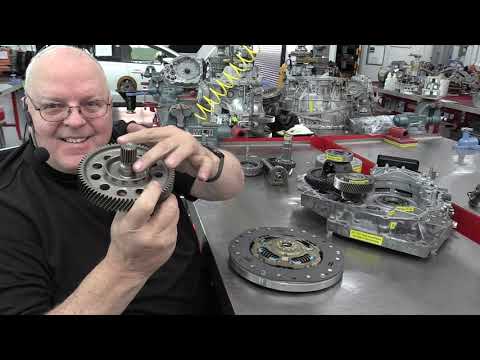
HN recommends it as a clear explanation of a mind-blowingly simple power-split hybrid design.

Commenters send it to people asking how engines survive such temperatures, and call it fascinating and worth watching.

Recommended as a humorous and clear explanation of everyday machines, including why washing machine balancing works.

HN commenters point to it as an entertaining teardown and as evidence that KitchenAid mixers are stoutly built.

Shared whenever gear reductions, exponential scaling or playful kinetic art come up.

Recommended to people who like building things, as part of Hunkin's body of practical engineering explainers.

HN links it constantly as vivid evidence of how much margin aircraft structures have and that destructive testing is real.

It is the standard link whenever a new Peltier or thermoelectric cooling breakthrough is posted.

Recommended for factory-process fans and as part of a series on how US manufacturing is losing tooling capability.

HN treats it as the canonical example of a Rube Goldberg style musical instrument and a work of love, and references it in threads on unconventional instruments and machines.

HN recommends the series as awesome and notes it is now legally on YouTube; commenters cite it for radio history.

Cited as a view into how outdated and error-prone NYC subway signaling is, and how antique interlocking systems work.

HN recommends it, and the whole series, for practical mechanical design insight such as how structures achieve stiffness.

Named as a favorite LPL video, where a skeptical locksmith's challenge gets answered quickly.

HN recommends it as a fascinating history of Soviet staged-combustion engines and why they stayed in use in American rockets.

Recommended as a clear walkthrough of nuclear plant economics and why incentives favor other generation.

HN commenters recommend it for its fluid dynamics of detonation waves and its high-speed imaging of rotating pulses.

Recommended for realistic engineering detail on extracting heat from a tokamak.

Recommended as a passionate take on good appliance design and cited in toaster threads.

HN recommends it as a clear explanation of the Model 3 motor and reluctance rotor design.

Pointed to when people want to see the cams and gears inside a mechanical navigation computer.

Linked whenever the Curta or mechanical calculators come up, as a look at a working 3D-printed version.

HN people point to it as the full explanation of how gas furnaces work, mostly in threads on heating, power outages and gas appliances.

Recommended as the introductory explainer whenever rotating detonation engines show up in the news.

Cited in steam car threads as a well-produced view of how a Doble works and how it solved startup in 1925.

Cited as a marvel of absurd precision in home-built machine tools, and a pointer to Gelbart's other videos.

HN points to it as a clear, visual demonstration whenever a Tesla valve comes up.

Recommended as a beautiful explanation of how the mechanism models the Moon's uneven motion.

Cited in threads on rigged arcade machines and gambling-like games as the clearest demonstration that skill games can be tuned to be unwinnable.

Recommended as a great look at how thoroughly airliners are inspected and rebuilt, and cited in aviation maintenance discussions.

Used as the real example of human-powered flapping flight, in contrast to hoaxes and other human-powered aircraft discussions.

Referenced as a typical example of the channel's hacker-eye view of everyday technology, and for its flasher explanation.

HN admires the maker's engineering and cites it in accessibility discussions, especially for the limits of sensory resolution versus perception.

Cited as a favorite example of clever mechanical design and as a reference for CNC joinery devices.

HN commenters cite it as an impressive hobbyist project and as an example of open-source engine control enabling freevalve retrofits.

HN uses it as a joke whenever jargon-heavy or meaningless technical pitches appear, and praises it as a masterclass in technobabble.

Cited in hydrogen threads as a clear explanation of why burning hydrogen in engines is a poor idea.

Cited in threads on camless, digital valve and free-piston engines as a look at Koenigsegg's freevalve work.

Pointed to as a good, detailed explanation of how water heaters work and how to save power with them.

HN points to it whenever chest fridges or freezer efficiency come up, as a clear explanation of design trade-offs between efficiency and convenience.

Used in AK versus AR reliability debates to show that the AK's legendary mud-proof reputation is overstated.

HN cites it as an example of computational mechanism design, especially in threads on gears, linkages and animatronics.

HN recommends it as an in-depth look at mechanical logic, and uses it as an analogy for state machines and biological instruction processing.

HN cites it as a hands-on demonstration that one person with simple tools can move huge stones, undercutting arguments that ancient construction needed lost technology.

HN points to it as a rare, detailed first-person explanation of Raptor engine design from Musk himself.

Cited in threads on flatness and precision as a glimpse into a niche metrology profession.

Linked in paper folding threads as a fun demonstration and as the video that made the channel famous.

HN links it in Strandbeest threads as a showcase of the eerily smooth, wind-driven walking creatures.

HN links it as a great, surprising explanation whenever rail wheels, gauge or curves come up.

Cited in AR versus AK reliability debates as evidence that the AR-15 handles mud better than its reputation suggests.

HN commenters cite it as the author's own demonstration of research showing that bicycle stability is not explained by gyroscopes.

Raised in lock-picking threads as a related attempt at an unpickable lock, and for novel anti-picking mechanisms.

HN uses it as shorthand for how compounding engineering improvements, crumple zones especially, made things safer, applied to analogies well beyond cars.

Cited as an approachable hobbyist look at RDEs in threads on detonation-powered rockets.

It gets mentioned as a thought-provoking video that changes how you look at everyday objects, though HN mentions are sparse.

HN commenters cite it as an illustration of the extreme effort Formula One teams put into safety, performance and reliability for a single part.

Linked in aviation threads to show that engines are designed to contain a failed fan blade.

Commenters cite it as stark evidence that modern cars are far safer than older ones, countering nostalgia for 'built like they used to'.

HN people link it in hybrid versus EV debates as a clear view of how simple the hybrid drivetrain really is.

Brought up whenever reaction wheels or self-balancing cubes come up, with the jump-up maneuver singled out as the coolest part.

Cited as the standard illustration of lost tacit knowledge and why old blueprints cannot be turned back into hardware.

Brought up as a charming example of analog and liquid computers simulating a national economy.

HN links it in power grid threads as a concrete demonstration of generator synchronization.

Brought up whenever wearable cooling or heat extremes come up, as a real worked example of a pumped-coolant cooling suit.

HN uses it as a vivid illustration of vacuum and pressure vessel failure in threads on hyperloop and submersible implosions.

HN links it with timestamps as an early, hands-on demo of control theory and as a curiosity from Davis's work.
Which of these have you already seen?
Connect YouTube and HackerTube AI hides what you've watched and ranks the rest for you.