
Frequently linked as a sobering, data-grounded counterpoint to techno-optimism about decarbonization and green growth.
Topics › Earth, Energy & Environment
The best renewables, batteries & storage videos, according to Hacker News
89 videos about renewables, batteries & storage that Hacker News commenters keep pointing each other to, ranked by how many separate months they were recommended. Part of Earth, Energy & Environment.

HN's default link for anyone asking whether heat pumps work and why they're efficient, thanks to the presenter's clear and enthusiastic delivery.

HN uses it as a contrarian critique of renewables and green tech, often recommended with caveats about bias and flawed conclusions.

Recommended as part of an excellent, approachable series explaining residential heat pumps.

HN repeatedly recommends it as an up-to-date, fact-focused case for solar and batteries that readers can cite on land use and costs.

HN recommends it as a technically rich, beautifully made documentary on ambitious hardware engineering and failure.

HN recommends the series as an enthusiastic, entertaining deep dive into residential heat pumps whenever heating or climate threads arise.

HN people link it as the go-to explainer for grid and inverter stability, especially in threads about blackouts and distributed solar.

HN uses it as the go-to rebuttal to vertical farming hype, since it gives hard numbers from a leading controlled-environment authority.

Cited in energy threads for Gates's argument on why batteries and renewables alone fall short and nuclear is needed.

HN commenters link it repeatedly as a clear, number-based rebuttal to the claim that EVs are worse for the climate than gas cars.

HN points to it as an impressive, hands-on DIY demonstration of passive radiative cooling that works in practice.

HN links it in hydrogen threads as a clear breakdown of why compounded inefficiencies make hydrogen a poor fit for cars, though one commenter calls it outdated.

Recommended as a clear explanation of pumped hydro and its limits in energy storage discussions.

HN cites it as a clear side-by-side showing the papercuts of non-Tesla fast charging in EV debates.

HN uses it as the go-to explanation of why hydrogen internal combustion engines do not make sense.

Cited in vertical farming debates as a rigorous look at when indoor crops are economically viable.

Linked whenever commenters ask whether Sahara solar could power Europe, as a clear explanation of why it is impractical.

HN used it as the go-to introduction to LFTR and thorium reactor technology in energy threads.

Cited in energy debates for its back-of-envelope scale of the transition and the land and storage limits of wind and solar.

HN commenters credit it with changing their minds on nuclear power and cite it for the downsides of renewables.

HN recommends it as a clear explanation of why batteries limit electric aviation.

Offered in energy and nuclear debates as a numbers-based walkthrough of renewable storage costs, though one commenter disliked its tone.

Treated as the essential primary source for Tesla's battery and cost-reduction plans, and a feast for engineering nerds.

HN recommends it as a grounded, data-driven counter to hype about quick energy revolutions.

HN commenters use it as a vivid, math-backed demonstration of what ultracapacitors can do and why shorting them is dangerous.

HN recommends it as an approachable, numbers-driven overview of what renewable energy would take.

Recommended as an entertaining, in-depth beginner's guide that persuades skeptics that a wall outlet often suffices.

Cited as a well-argued case that solar plus batteries and EVs will reach a tipping point sooner than mainstream forecasts expect.

HN brings it up in energy storage threads as a promising scalable grid storage technology, and calls it worth the hour.

HN commenters point to it as a clear, short tour of Terraform's synthetic fuel approach and goals.

Bitcoin advocates on HN cite it to rebut energy-consumption and waste criticisms, though it is an advocacy piece from a Bitcoin company.

HN commenters recommend the channel's alternative-living videos, and this one for its look at a net-zero desert home.

HN points to it as real-world, side-by-side data on vertical versus angled panel orientation.

Frequently linked whenever wind-powered vehicles come up, as the clearest visual explanation of how the craft works.

HN commenters recommend it as the best overview of power satellites, with pros and cons beyond the construction cost.

Cited in nuclear-versus-renewables debates to support the argument that cheap renewables undercut new nuclear.

HN points to it as a detailed, DIY-able design for desiccant-based cooling.

HN recommends it as a detailed look at battery degradation, in threads on EV and grid storage lifetimes.

Used as the explanation behind the free-lithium-cell scavenging idea in threads about vapes and battery reuse.
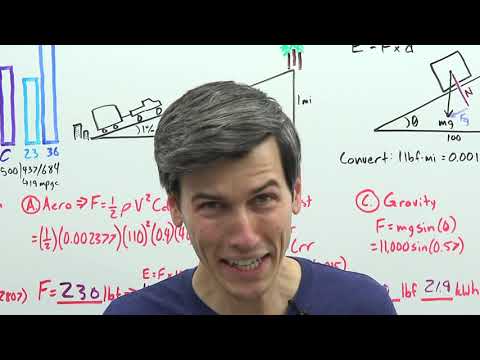
HN points to it as a solid analysis of EV towing range in truck and highway threads.

HN cites it in hydrogen strategy threads as a concise skeptical summary of why hydrogen is not yet viable.

Pointed to as primary-source company material that answers many engineering questions about the Lilium jet.

HN points to it as evidence that battery recycling is more advanced and practical than people assume.

HN points to it in battery-fire threads as a rare look at what is inside a Li-ion cell and how dangerous disassembly really is.

HN commenters point to it in lighting threads for its pros and cons of LED versus sodium lamps, though one calls it almost right.

Cited as Bussard's last substantial public presentation on polywell fusion and the source of his claim that about $200M would be enough.

Linked in fuel and aviation threads as the full story on why ethanol and biofuels are energy-negative or inefficient.

HN cites it for Orkney's surplus renewable energy, hydrogen facilities and EV uptake.

Referenced as an early, inspiring presentation of the molten-metal battery idea that later grid-storage startups pursued.

HN links it as a nice intro to what a realistic Dyson swarm would require, and as a companion to megastructure discussions.

Cited in grid, smart thermostat and energy storage threads as an accessible explanation of load shifting.

HN commenters cite it as a big-picture case for exponential solar and EV adoption, usually with caveats about whether his predictions will hold.

HN cites it as the evidence that inductive EV charging can match wired charging in efficiency.

HN commenters cite it as an entertaining reality check on home gravity storage, showing the yield is tiny compared to household needs.

HN commenters cite it as a primary source for Tesla's claims on battery materials, assembly design, 48V architecture and energy investment.

Cited in energy transition threads for ballpark numbers on mineral demand, though some commenters criticize its assumptions.

HN cites it in hydrogen car debates, with some seeing it as evidence of relative safety and others finding it unconvincing.

HN cites it as support for the argument that renewables with storage are already cheapest and still getting cheaper.

Cited as a technical look at how Tesla's VPPs and Autobidder work as distributed systems.

Linked as concrete evidence that automated battery swapping already works in practice, especially in China.

HN commenters cite it as hands-on testing of a solid-state battery claim, though some remain skeptical until products ship.

HN cites it as the go-to debunking whenever solar roads come up, because it does the math.

HN commenters cite it as a concrete, working example of large-battery electric shipping with fast automated charging.

Linked as concrete evidence that automated EV battery swapping already works at scale in China.

HN commenters link it as a defense of Bitcoin's energy use, offered as a rebuttal to claims that mining is wasteful.

HN cites it whenever grid storage or pumped hydro comes up, as an accessible example of storage at scale.

HN points to it as a real example of battery swapping and diesel-to-electric conversion for heavy trucks.

Cited as an example of Orkney's grid innovation and role as a test site for renewable tech.

Linked as visual evidence that the Model S supported battery swapping whenever swap stations come up.

Used as a critical reference to argue gravity energy storage is impractical, not as a general recommendation.

Mentioned only occasionally as a contrarian argument for hybrids over EVs, with no real endorsement.

Cited as a quick explainer in threads about rooftop solar, renewables, and grid load.

The standard reference whenever threads discuss electrifying trucking via overhead lines instead of big batteries.

HN mostly cites it as an example of sponsored content, with critics calling it FUD about battery electric cars, though one commenter noted it as a comparison.

Cited in EV threads as evidence that public fast-charging reliability suffers in cold temperatures.

Go-to reference in EV threads for showing that battery swapping already works in practice.

HN cites it as the go-to debunk when gravity storage projects appear, usually by commenters who think the idea is a dud.

Cited as a concrete example of a big renewable-plus-interconnector project in threads about nuclear costs, grid interconnects and submarine cables.

Cited in hydrogen debates as evidence that pressurized hydrogen tanks do not necessarily explode when punctured.

HN cites it as a debunking whenever the space mirror startup comes up, as a TL;DW that the design is impractical.

Cited repeatedly as a quick visual demonstration that solid-state or polymer batteries can survive abuse without igniting.

HN references it as prior art whenever solar sintering, sand printing or sunlight-based manufacturing comes up.

HN points to it as the real-world example for the garage orphan problem, meaning EV owners with no home charger.

Cited as a good explainer on EV charging, including the CCS standard with Tesla as the holdout.

Repeatedly linked under hype stories about nuclear diamond batteries as the definitive debunk.

Cited in threads on atmospheric water harvesting as the standard debunking of such startups.

Cited in battery and electrical safety threads as a vivid demonstration of what very high-current battery banks can do.

HN cites it in wind-power debates as measured evidence that turbine noise is low relative to ambient or road noise.
Which of these have you already seen?
Connect YouTube and HackerTube AI hides what you've watched and ranks the rest for you.